|
 |
 | | | | | | ||||||||||||||||||||||||||||||||||||||||||||||||||||||||||||||||||||||||||||||||||||||||||||||||||||||||||||||||||||||||||||||||||||||||||||||||||||||||||||||||||||||||||||||||||||||||||||||||||||||||||||||||||||||||||||||
| | | You are in: Americas | ||||||||||||||||||||||||||||||||||||||||||||||||||||||||||||||||||||||||||||||||||||||||||||||||||||||||||||||||||||||||||||||||||||||||||||||||||||||||||||||||||||||||||||||||||||||||||||||||||||||||||||||||||||||||||||||||
|
| | Saturday, 18 January, 2003, 21:15 GMT Eyewitness: US anti-war protests  Demonstrators travelled from all over America
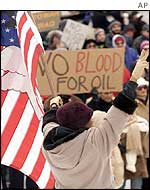
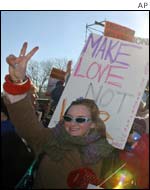
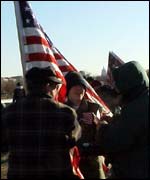
It was one of the coldest days of the year in Washington, with the US capital still blanketed in a light covering of snow. But nevertheless there was something of a carnival spirit on the huge Mall, between the US Congress and the White House, where the anti-war protesters were gathering.
One group from Lansing, Michigan even brought its own full-size anti-war mural, with eight full-size silhouettes of Iraqi people covered by newsprint. And colourful groups of demonstrators strolled past, including a Ben and Jerry's Ice Cream contingent, a pink-clad women's peace delegation, and groups in their state colours, from green jerseys from Vermont to bright orange banners from Florida. Sending a message Alan Kachic from Niagara Falls, New York, had just stepped off the bus after an eight-hour journey.
Chelsea Stanford, an 18 year-old student from the University of Wisconsin, had an even longer journey - travelling overnight to reach Washington. Clutching her anti-war poster, she told the BBC that she and her friends wanted to make a difference - and they were worried that the Bush Administration's policy on war would mean that domestic priorities, like education would suffer. Tuition was already was going up at her university, and student financial support was going down. And for the Reverend Amy Stapleton, a Methodist minister from the big naval base of Norfolk, Virginia, it was her religious duty to oppose war. There were groups from all around the country, including the Midwest and South. Rachel Clark, a teacher from Houston, Texas, said she came because she wanted to make a difference and stop the war - and also wanted to speak up for the rights of the voiceless, including immigrants and Muslims in the US. Conditional support One group from Minnesota carried a banner honouring the memory of Paul Wellstone, the anti-war Democratic Senator who died in an accident just before the November elections.
The only Democratic hopeful for the Presidency who appeared on the platform at the anti-war protest was the Reverend Al Sharpton, the civil rights activist who has little chance of the nomination. And despite the large numbers who came to Washington, public opinion is still divided on the potential war. Most people would oppose unilateral US action against Iraq - but the majority would support military action if it was backed by the United Nations and other Allies, and based on evidence of concealed weapons found by the inspectors. And those views may be shared by some of the protesters too. Gil Bunto, a retail clerk from Long Branch, New Jersey, told the BBC that he thought the inspectors should be given time to finish the job, and he was concerned about the rush to war as thousands of US troops converged on the Gulf. But he said that, if there was evidence of weapons of mass destruction, he might have to think again about his opposition to a war. | |
See also:  18 Jan 03 | Middle East 18 Jan 03 | Americas 18 Jan 03 | UK 18 Jan 03 | UK 11 Jan 03 | Middle East Internet links: The BBC is not responsible for the content of external internet sites Top Americas stories now: Links to more Americas stories are at the foot of the page. | ||||||||||||||||||||||||||||||||||||||||||||||||||||||||||||||||||||||||||||||||||||||||||||||||||||||||||||||||||||||||||||||||||||||||||||||||||||||||||||||||||||||||||||||||||||||||||||||||||||||||||||||||||||||||||||||
 | |
|  E-mail this story to a friend E-mail this story to a friend |
| |
| Links to more Americas stories |
| | | ||
 | ||||
 | | Back to top
| ||
| ---------------------------------------------------------------------------------- To BBC Sport>> | To BBC Weather>> | To BBC World Service>> ---------------------------------------------------------------------------------- © MMIII | News Sources | Privacy |