|
 |
 | | | | | | ||||||||||||||||||||||||||||||||||||||||||||||||||||||||||||||||||||||||||||||||||||||||||||||||||||||||||||||||||||||||||||||||||||||||||||||||||||||||||||||||||||||||||||||||||||||
| | | You are in: Americas | ||||||||||||||||||||||||||||||||||||||||||||||||||||||||||||||||||||||||||||||||||||||||||||||||||||||||||||||||||||||||||||||||||||||||||||||||||||||||||||||||||||||||||||||||||||||||
|
| | Monday, 11 November, 2002, 17:13 GMT US bishops debate sex abuse 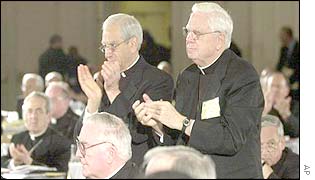 The bishops drew up the policy in June
The four-day meeting of the US Conference of Catholic Bishops has a long agenda, covering a range of religious and social issues. But it is the ongoing debate about how to deal with priests who molest children that will dominate their discussions.
After a year of scandals, law suits and damaging headlines, the bishops want to restore public confidence by showing they now have an effective policy for dealing with paedophiles. Earlier this year, the American bishops were summoned to Rome for talks with the Pope, following a series of allegations against priests across the United States. At a conference in Dallas in June, they set out proposals to give local bishops the power to take immediate action to remove abusers from the priesthood. Secretive But when a delegation of bishops discussed their plans with Vatican officials, concern was expressed that the measures would deny suspects their right to due process under Church law.
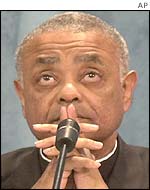
But groups representing the victims of sexual abuse by priests have also come to Washington to protest over the proposed changes. They argue that the disciplinary process will be cumbersome and secretive, and could result in molesters being allowed to remain in their parishes. "We are calling on America's bishops to strengthen, not weaken, the promises they made in Dallas," said David Cerulli, a member of Snap, the Survivors' Network of those Abused by Priests. But the president of the US Conference, Bishop Wilton Gregory, said the norms being proposed would complement the existing laws of the church, which treated the sexual abuse of minors with the utmost gravity. "Contrary to many news reports, the Holy See did not reject or even 'soften' this work," he said. "This particular law will provide every diocese in the country with standards for protecting children and young people, reaching out to victims, assessing allegations against clergy... and keeping from ministry anyone who would harm children." Reputations Members of the American delegation to Rome insist that the changes simply ensure that the disciplinary process respects the rights of any priest accused of sexual abuse.
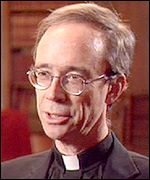
The latest proposals, as agreed by the Vatican, back the plan to remove from the ministry any priest found guilty of "even a single act" of sexual abuse. But at the insistence of church officials in Rome, the process has been refined to prevent the reputation of a priest being destroyed by unfounded allegations. A priest will only be suspended after an initial investigation by his bishop, and the process will be conducted in secret. But do the revised proposals still amount to a "zero tolerance" policy on sexual abuse by priests? Will it be a case of "one strike and you're out"? Limitations Father Thomas Reese, editor of the Catholic magazine America, says some aspects of the new policy are not clear.
In the case of a minor abused by a priest, a prosecution has to be taken within 10 years of the victim reaching the age of 18. The new procedure requires bishops to ask for an exception to this rule for each individual case, but the magazine questions how often it would be granted. "What happens to a priest who has admitted sexually abusing a minor beyond the statute of limitations?" asks Father Reese. "Can his bishop continue him in ministry? Can the bishop permanently suspend him if he wants to? The canon lawyers I talked to were uncertain or gave me contradictory opinions. "The norms need to be clarified by the bishops before they are sent back to Rome." Once the revised document has been agreed by the US bishops, and finally approved by the Vatican, the policy is expected to remain in force for at least two years before being reviewed. | |
See also:  11 Nov 02 | Americas 01 Nov 02 | Americas 15 Jun 02 | Americas 25 Apr 02 | Americas 23 Apr 02 | Europe Internet links: The BBC is not responsible for the content of external internet sites Top Americas stories now: Links to more Americas stories are at the foot of the page. | ||||||||||||||||||||||||||||||||||||||||||||||||||||||||||||||||||||||||||||||||||||||||||||||||||||||||||||||||||||||||||||||||||||||||||||||||||||||||||||||||||||||||||||||||||||||
| |
|  E-mail this story to a friend E-mail this story to a friend |
| |
| Links to more Americas stories |
| | | ||
 | ||||
 | | Back to top
| ||
| ---------------------------------------------------------------------------------- To BBC Sport>> | To BBC Weather>> | To BBC World Service>> ---------------------------------------------------------------------------------- © MMIII | News Sources | Privacy |