|
 |
 | | | | | | ||||||||||||||||||||||||||||||||||||||||||||||||||||||||||||||||||||||||||||||||||||||||||||||||||||||||||||||||||||||||||||||||||||||||||||||||||||||||||||||||||||||||||||
| | | You are in: Americas | ||||||||||||||||||||||||||||||||||||||||||||||||||||||||||||||||||||||||||||||||||||||||||||||||||||||||||||||||||||||||||||||||||||||||||||||||||||||||||||||||||||||||||||||
|
| | Thursday, 31 October, 2002, 21:14 GMT The Halloween maize maze 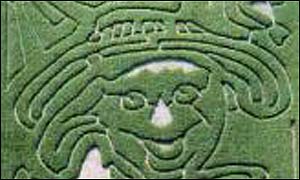 Competition gave birth to new ideas
Three teenagers, arm in arm, head cautiously down a dark passageway, armed only with a couple of torches. "We're lost... Let's go this way... No, the other way."
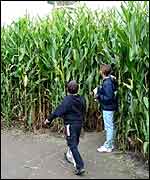
It is a Halloween outing for youngsters from a church in Everett, just north of Seattle. But it is a new form of Halloween entertainment - a "haunted corn maze". From "Field of Dreams," so to speak, to "Field of Screams." Lucrative Over the last decade, corn mazes - literally, mazes cut into fields of maize - have become increasingly popular in the United States. And, of course, this being America, they are getting ever bigger and more lucrative. Many cover several hectares, and from the air depict - for example - cowboys lassoing steers, howling coyotes, kangaroos, scarecrows, steamboats and even the human body. The youngsters from Everett each paid $8 to be frightened out of their wits at such a corn maze at Stocker Farms, about 40 minutes' drive from Seattle. For Keith Stocker, that money is saving his family farm.
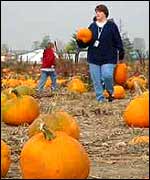
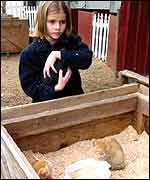
The farm had been left high and dry by the expansion of the suburbs. The local food processing companies, seeking cheaper land, had moved north and the east, leaving the farm with no obvious way to market its produce. So Keith Stocker decided to sell directly to the public. All the farm's produce is now sold at the shop on site. And visitors, along with their urban dollars, are attracted to the farm for a fun day out. In addition to the corn maze, there is a pumpkin patch, children's zoo, and hayrides. "We call it agritainment," he says. "We're educating and entertaining people out here in the open, on the farm." Forced out of business A few kilometres to the north, the Krause family farm - known simply as "The Farm" - boasts the largest maze in Washington State. The five-hectare puzzle depicts the State itself, complete with about six kilometres of "roads", the Olympic Mountains, mountain goats and the Seattle Space Needle. Visitors are handed maps and an educational quiz - the clues are in the maze. And "Interstate 5", running north-south, gives the desperate an easy escape route.
He says he was driven out of business by huge supermarket chains, buying in bulk at low wholesale prices. "The price structure just isn't fair," he says, as yet another coach-load of excited schoolchildren heaves into the car park. "The price of milk right now is just 77 cents a gallon for the farmer. They're charging four-something in the stores. Some people lost their farms, some people had to go get jobs to keep their farms going. But a lot of small farmers, like myself, we chose to get out." The opening of agricultural markets worldwide has also adversely affected smaller farms in the United States.
"It's the downside of globalisation. Prices are set globally, yet farmers have their costs set at the local level. So their land, labour and input costs don't meet the price they're getting on the global market. So now they're looking for alternatives." Some alternative forms of farm revenue are not new - pick-your-own crops, bed and breakfasts, horse riding holidays, dude ranches and the like, are commonplace. But agri-tourism in the United States is becoming ever more resourceful and creative. The key, of course, is to sell directly to the consumer, either at the farm, or at the ubiquitous farmers' markets.
Instead of simply sending his entire crop to a processing company, he now has to sell to thousands of individuals. And to do that, he has to attract them - and their urban dollars - to the farm, educate them about the advantages of local produce, and win their continuing support. "Today our family farms need to be innovative, they need to think where their market is. With direct marketing, you're trying to engage the customer on a deeper level than simply their pocket book at the grocery store." In a way, the very image of the farmer is changing - now less the solitary figure out in his fields, more the entertainer, the educator, and the salesman. "I feel like I'm an entertainer every day, whether I'm trying to convince somebody that mine's the best sweet corn to buy in the valley, or that dropping a few dollars at the gate to go into the corn maze is a good idea," said Keith Stocker. "I'm selling a product, but it doesn't look like an agriculture product in some senses. What we're really selling is a good time - you can hear the people laughing, screaming, having a good time. That looks like an entertainment thing, but it's still agriculture, it's just a different twist." | | See also:  31 Oct 02 | Business 25 Oct 02 | Business 27 Aug 02 | Business 15 Oct 02 | England 31 Oct 01 | Americas 23 Oct 02 | Wales 22 Oct 02 | England Internet links: The BBC is not responsible for the content of external internet sites Top Americas stories now: Links to more Americas stories are at the foot of the page. | ||||||||||||||||||||||||||||||||||||||||||||||||||||||||||||||||||||||||||||||||||||||||||||||||||||||||||||||||||||||||||||||||||||||||||||||||||||||||||||||||||||||||||||
| |
|  E-mail this story to a friend E-mail this story to a friend |
| |
| Links to more Americas stories |
| | | ||
 | ||||
 | | Back to top
| ||
| ---------------------------------------------------------------------------------- To BBC Sport>> | To BBC Weather>> | To BBC World Service>> ---------------------------------------------------------------------------------- © MMIII | News Sources | Privacy |