|
 |
 | | | | | | |||||||||||||||||||||||||||||||||||||||||||||||||||||||||||||||||||||||||||||||||||||||||||||||||||||||||||||||||||||||||||||||||||||||||||||||||||||||||||||||||
| | | You are in: Americas | |||||||||||||||||||||||||||||||||||||||||||||||||||||||||||||||||||||||||||||||||||||||||||||||||||||||||||||||||||||||||||||||||||||||||||||||||||||||||||||||||||
|
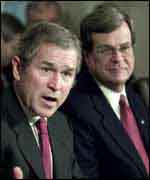
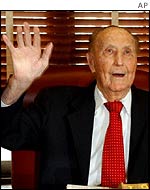
| | Friday, 20 December, 2002, 17:41 GMT Trent Lott: Leader felled by uproar  Not a man to hide his opinions Trent Lott did not have an easy time in his two-and-a half years as Republican leader in the Senate. But those difficulties suddenly paled when he appeared at the 100th birthday party of veteran Senator Strom Thurmond in early December and made remarks taken by many as racist.
However, Mr Lott was soon fighting for his political life amid a barrage of calls for his resignation. President George W Bush rebuked Mr Lott publicly and his own deputy Senate leader, Oklahoma Senator Don Nickles, urged him to step down. On 20 December, Mr Lott announced he would quit. Deadlocked Senate Mr Lott had succeeded Bob Dole as his party's leader in the Senate in 1996 and for four years was majority leader, playing a major role in the efforts to impeach former President Bill Clinton.
With Mr Bush's victory in 2000, he would have hoped to lead the Senate in pushing through a Republican agenda. But the Senate elections in that year left the Republicans and Democrats with 50 seats each. Mr Lott's party had the advantage that Vice-President Dick Cheney sat in the Senate and so on crucial votes could swing the results the Republicans' way, but the precarious balance meant that the conservative and reputedly hardline Mississippi senator had to compromise with his Democrat opposite number, Tom Daschle, over control of Senate committees. The compromise came as a surprise to those who had seen Senator Lott as an immovable figure on the right of US politics. But the compromise was of little value when, in June 2001, Republican Senator Jim Jeffords of Vermont left the party to become an independent, giving the Democrats the majority. At that point, Senator Lott became Republican minority leader. But the groundswell of national support for President Bush saw the Republicans do well in mid-term elections in early November 2002 and regain control of Congress. Playing politics For a stalwart of the Republican right on domestic and economic issues, Trent Lott was cautious in his reactions to President Bush's attempts to secure congressional support for action against Iraq. He seemed unconvinced about the strength of the arguments for action. The Washington Post quoted him as saying in September 2002: "I do think we're going to have to get a more coherent message together" to convince Congress of the case for military action.
But he also accused the Democratic Party in Congress of "partisan political posturing" on both Iraq and the issue of presidential powers over homeland security institutions. On mainstream domestic issues such as tax cuts, gun control and energy policy, Trent Lott had no need to be convinced and was fully behind the Bush Republican mission. In supporting a conservative agenda, he was repeatedly critical of Democratic opposition in congress, which he saw as playing politics with vital issues. Of his own chamber he said recently: "There's no question the Senate has become a partisan pit hindering a lot of needed national legislation." Right-wing links Born in 1941 in Pascagoula, Mississippi, Trent Lott entered politics as an assistant to a Mississippi congressman in 1968, before being elected as a Republican member of the House of Representatives in 1972. He served there until 1988, when he was elected to the Senate. Senator Lott was a Republican Whip in both the House and the Senate, before succeeding the veteran Republican Bob Dole as Senate Majority leader in 1996.
Mr Lott is a southern Baptist Christian and has been connected with right-wing organisations and the anti-abortion lobby. In 1998, accusations that he was a supporter of the Council for Conservative Citizens, a right-wing group labelled by many as a front for white supremacist ideas, led him to publicly distance himself from the council and to stonewall questions about his appearance at council events. His aides said he strongly rejected the views for which the council stood. | | See also:  20 Dec 02 | Americas 20 Dec 02 | Americas 15 Dec 02 | Americas 12 Dec 02 | Americas 25 Sep 02 | Americas 10 Dec 02 | Americas 17 Dec 02 | Americas 06 Nov 02 | Americas Internet links: The BBC is not responsible for the content of external internet sites Top Americas stories now: Links to more Americas stories are at the foot of the page. | |||||||||||||||||||||||||||||||||||||||||||||||||||||||||||||||||||||||||||||||||||||||||||||||||||||||||||||||||||||||||||||||||||||||||||||||||||||||||||||||||
 | |
|  E-mail this story to a friend E-mail this story to a friend |
| |
| Links to more Americas stories |
| | | ||
 | ||||
 | | Back to top
| ||
| ---------------------------------------------------------------------------------- To BBC Sport>> | To BBC Weather>> | To BBC World Service>> ---------------------------------------------------------------------------------- © MMIII | News Sources | Privacy |





 To all those who offered friendship, support and prayers, I will be eternally grateful. I will continue to serve the people of Mississippi in the Senate