
|
 |
 | | | | | | ||||||||||||||||||||||||||||||||||||||||||||||||||||||||||||||||||||||||||||||||||||||||||||||||||||||||||||||||||||||||||||||||||||||||||||||||||||||||||||||||||||||||||||||||||||||||||||||||||||||||||||||||||||||||||||||||||||||||||||||||||||||||||||||||
| | | You are in: Americas | ||||||||||||||||||||||||||||||||||||||||||||||||||||||||||||||||||||||||||||||||||||||||||||||||||||||||||||||||||||||||||||||||||||||||||||||||||||||||||||||||||||||||||||||||||||||||||||||||||||||||||||||||||||||||||||||||||||||||||||||||||||||||||||||||||
|
| | Wednesday, 2 October, 2002, 11:42 GMT 12:42 UK US is 'afraid of inspections' 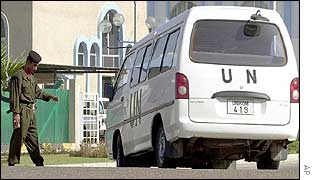 Iraq accepted all inspection rights under existing UN resolutions The United States is afraid of letting weapons inspectors into Iraq because it knows they will find no illegal weapons in the country, Iraq's deputy prime minister says.
Mr Aziz said the US should be glad Iraq had agreed to the inspections. Both the US and Britain have said they will oppose the resumption of inspections until the UN Security Council lays down some tough new rules on Baghdad. Russia on the other hand has welcomed the deal, which it says paves the way for the inspectors' return. 'Pretext for aggression' Mr Aziz said the US was using the claim that Iraq possessed deadly weapons as an excuse to pursue an "aggressive agenda" against the country. "I have always said the question of weapons of mass destruction was a pretext to justify the unjustifiable aggression on Iraq," he told reporters. "The US is unhappy because it is afraid that when inspectors come to Iraq they will tell world that Iraq has no weapons of mass destruction." Mr Aziz added that there was no need for a new resolution as "the practice of the inspectors in Iraq has been defined by previous resolutions which we are ready to comply with" and that threatened military strikes would only destabilise the region. Tough resolution wanted US Secretary of State Colin Powell made it clear that the arrangement reached by Iraqi and UN officials in Vienna for the return of weapons inspectors was not acceptable.
Washington - which wants to see Iraqi leader Saddam Hussein toppled - is pushing for a tough new Security Council resolution that would specifically mention the threat of military intervention should the inspectors be unable to complete their work. It does not want inspectors to return until this is passed. UK Foreign Secretary Jack Straw also said that the deal was not an alternative to a new resolution that would give unfettered access to all sites in Iraq suspected of holding chemical and biological weapons. Russia - which has the power of veto in the Security Council - has welcomed the agreement between the UN and Baghdad on the resumption of inspections. A Foreign Ministry spokesman said the agreement now paves the way for inspectors to return to Iraq. China echoed this view, saying that the return of inspectors now had to be the first priority. 'Thwart mode' Legally the US and Britain cannot prevent the return of UN weapons inspectors to Iraq. But BBC correspondents say that, as a servant of the Security Council, it would make little sense for the inspectorate to carry out the existing mandate if the Security Council was not satisfied with what they were doing. Chief weapons inspector Hans Blix may now wait until his briefing with the council in New York later this week to see how it wishes him to proceed and whether his inspectors should wait before returning to Baghdad. And a senior US State Department official said the US would go into "thwart mode" if Mr Blix and his team did, as planned, go back to Iraq in October without fresh instructions from the Security Council.
Palace row Under the deal, reached at two days of talks in Vienna, Iraq accepted all inspection rights under existing UN resolutions. Mr Blix said the inspectors would have unconditional access - but crucially not to eight presidential palaces. Those sites are covered under a 1998 memorandum of understanding agreed by Iraq and UN Secretary General Kofi Annan, which includes giving the Iraqis prior notification of planned visits by inspectors. Mr Aziz said that in Iraq's opinion that memo still stood. US diplomats are currently circulating a draft text for a UN resolution which specifically demands access to these palaces as well as a complete list of all Iraqi weapons of mass destruction before weapons inspectors enter the country. If Iraq was found to have made false statements on this list, the country would face the prospect of immediate military action. | |

 See also: 02 Oct 02 | Politics 02 Oct 02 | Middle East 02 Oct 02 | Americas 02 Oct 02 | Politics 02 Oct 02 | Middle East 30 Sep 02 | Middle East 30 Sep 02 | Middle East Internet links: The BBC is not responsible for the content of external internet sites Top Americas stories now: Links to more Americas stories are at the foot of the page. | ||||||||||||||||||||||||||||||||||||||||||||||||||||||||||||||||||||||||||||||||||||||||||||||||||||||||||||||||||||||||||||||||||||||||||||||||||||||||||||||||||||||||||||||||||||||||||||||||||||||||||||||||||||||||||||||||||||||||||||||||||||||||||||||||
| |
|  E-mail this story to a friend E-mail this story to a friend |
| |
| Links to more Americas stories |
| | | ||
 | ||||
 | | Back to top
| ||
| ---------------------------------------------------------------------------------- To BBC Sport>> | To BBC Weather>> | To BBC World Service>> ---------------------------------------------------------------------------------- © MMIII | News Sources | Privacy |








 79.51%
  20.49%