|
 |
 | | | | | | |||||||||||||||||||||||||||||||||||||||||||||||||||||||||||||||||||||||||||||||||||||||||||||||||||||||||||||||||||||||||||||||||||||||||||||||||||||||||||||||||||||||||||||||||||||||||||||||||||||||||||||||||||||
| | | You are in: Americas | |||||||||||||||||||||||||||||||||||||||||||||||||||||||||||||||||||||||||||||||||||||||||||||||||||||||||||||||||||||||||||||||||||||||||||||||||||||||||||||||||||||||||||||||||||||||||||||||||||||||||||||||||||||||
|
| | Thursday, 26 September, 2002, 22:12 GMT 23:12 UK Congress 'close to agreement' on Iraq 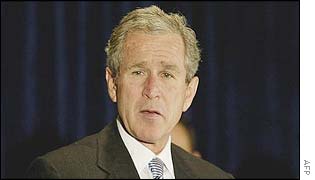 Bush says the two sides are nearing an agreement President George W Bush has said that the United States Congress is close to agreeing a "tough" resolution on the Iraq crisis. Speaking after talks with leaders of both the Republican and Democratic parties, the US president said Congress would soon speak with one voice.
The president is seeking authorisation to take military action against Iraq, but there is currently an intense debate in Washington between his supporters and critics on the precise wording of a joint statement on how to deal with Saddam Hussein. His comments came less than a day after a bitter row with senior Democrat Tom Daschle, who accused the White House of politicising the issue of Iraq. "The security of our country is the commitment of both political parties and the responsibility of both elected branches of government. We are engaged in a deliberate and civil and thorough discussion. We are moving toward a strong resolution," Mr Bush said. "All of us, and many others in Congress, are united in our determination to confront an urgent threat to America." UN wording The White House is also pressing for a new tough United Nations resolution setting out demands for Iraq. State Secretary Colin Powell said on Thursday the US and Britain had agreed on the wording of the proposed document. But he admitted there were still difficulties getting agreement from the other members of the UN Security Council, notably Russia and France. The two countries with veto powers favour a different approach, with Russia insisting no new resolution is needed before weapons inspectors return tom Iraq. French Foreign Minister Jean-Pierre Raffarin also said that the UN should do everything possible to avoid a war in Iraq, which he said was "always the last option". Mr Powell announced that a senior State Department official, Marc Grossman, will go to Paris and Moscow to try to sort out some of those differences. But once again he warned that the US was prepared to go it alone if it could not get the UN backing. Urgency The Bush administration sent a draft resolution to Congress last week seeking authorisation to use "all means" to make Iraqi leader Saddam Hussein give up his weapons of mass destruction.
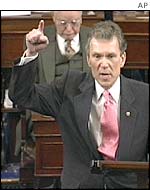
The president wants a resolution passed before Congress adjourns ahead of mid-term elections on 5 November. But Mr Daschle, the Senate Majority Leader, has demanded an apology from the president for suggesting that the opposition Democrats were not concerned about US security. In an angry and impassioned speech on the floor of the Senate, the normally measured and softly spoken Mr Daschle said President Bush had insulted Democrats when he said the Democrat-controlled Senate was "not interested in the security of the American people". "You tell those who fought in Vietnam, those who fought in World War II," Mr Daschle said. US economy Many Democrats have misgivings about Mr Bush's policy on Iraq. However, Mr Daschle and House Democratic leader Dick Gephardt have both indicated that they would support such legislation and help get it passed before Congress adjourned for the mid-term elections. As the November congressional elections approach, Mr Bush's Republican administration is focussing attention on its war on terror and confronting Iraq. Democrats, who would like to draw attention to the suffering US economy, are concerned that Republicans are politicising national security issues for party political ends. "That is wrong. We ought not politicise this war. We ought not politicise the rhetoric about war and life and death," Mr Daschle told the Senate. Pressed by journalists on Wednesday, President Bush did not respond directly to Mr Daschle's accusation that he was making the Iraq situation a political issue. "Legitimate national security concern is what it is. You may try to politicise it. I view it as my main obligation, that is to protect the American people," the president said. | |
See also:  26 Sep 02 | Americas 26 Sep 02 | Middle East 24 Sep 02 | Americas 24 Sep 02 | Americas 24 Sep 02 | Politics Internet links: The BBC is not responsible for the content of external internet sites Top Americas stories now: Links to more Americas stories are at the foot of the page. | |||||||||||||||||||||||||||||||||||||||||||||||||||||||||||||||||||||||||||||||||||||||||||||||||||||||||||||||||||||||||||||||||||||||||||||||||||||||||||||||||||||||||||||||||||||||||||||||||||||||||||||||||||||
| |
|  E-mail this story to a friend E-mail this story to a friend |
| |
| Links to more Americas stories |
| | | ||
 | ||||
 | | Back to top
| ||
| ---------------------------------------------------------------------------------- To BBC Sport>> | To BBC Weather>> | To BBC World Service>> ---------------------------------------------------------------------------------- © MMIII | News Sources | Privacy |