
|
 |
 | | | | | | ||||||||||||||||||||||||||||||||||||||||||||||||||||||||||||||||||||||||||||||||||||||||||||||||||||||||||||||||||||||||||||||||||||||||||||||||||||||||||||||||||||||||||||||||||||||||||||||||||||||||||
| | | You are in: Americas | ||||||||||||||||||||||||||||||||||||||||||||||||||||||||||||||||||||||||||||||||||||||||||||||||||||||||||||||||||||||||||||||||||||||||||||||||||||||||||||||||||||||||||||||||||||||||||||||||||||||||||||
|
| | Wednesday, 21 August, 2002, 22:01 GMT 23:01 UK Bush maintains pressure on Iraq 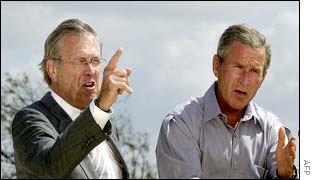 The US faces broad opposition to its Iraq plans President George W Bush has renewed calls for a regime change in Iraq, but promised that he will consult allies before taking any military action. He was speaking to reporters after a meeting of the most senior defence officials in the United States.
However, Iraq was not under discussion at the Wednesday's talks, which focused on long-term security and defence planning. Mr Bush said that the talks - at his ranch in Texas - had focused on ways of boosting US military capabilities in the aftermath of 11 September. Asked by reporters whether he would be prepared to go to war against Iraqi leader Saddam Hussein alone Mr Bush said there was a frenzy over the issue and that he would continue to consult friends and allies. "We will look at all options and we will consider all technologies available to us, and diplomacy and intelligence," Mr Bush said. Distraction The president was joined by Defence Secretary Donald Rumsfeld, Vice-President Dick Cheney, National Security Adviser Condoleezza Rice and the chairman of the joint chiefs of staff, General Richard Myers. But General Tommy Franks, who would lead any military action to topple President Saddam Hussein, had not been invited - and neither had Secretary of State Colin Powell.
The BBC's Mike Wooldridge says US administration officials concede that putting the emphasis on protecting Americans in the aftermath of last year's attacks has been a distraction from long-range issues of military planning and reform. This meeting, they say, has been about keeping both on track: an over-the-horizon review of the needs of the US military, but with a very topical edge. The US-led war on terror has a bearing on the military budget and probably on the kind of weapons systems that will be favoured and developed in the future, our correspondent says. The talks also discussed the direction of missile defence, now that the US has withdrawn from the Anti-Ballistic Missile Treaty. The proposed missile defence system would still be designed to protect the US against the threat of intercontinental ballistic missiles. However, in a world of rapidly changing threats, US concern today is also focused on the growing number of nations acquiring missile technology that could be used, for example, against American or allied forces around the world, our correspondent says. Growing dissent The meeting comes amid increasingly vocal reservations both at home and abroad about military intervention in Iraq. Senior members of Mr Bush's own Republican Party have expressed opposition to the president's policy. Canada has become the latest American ally to voice doubts about a strike against Iraq. Several European allies are also cool about a possible attack. But Mr Bush repeated that Washington's focus remained on removing Saddam Hussein. "One thing is for certain is that this administration agrees that Saddam Hussein is a threat and ...it hasn't changed," Mr Bush said. | |
See also:  20 Aug 02 | Americas 20 Aug 02 | Americas 17 Aug 02 | Middle East 16 Aug 02 | Americas 16 Jun 02 | Americas Top Americas stories now: Links to more Americas stories are at the foot of the page. | ||||||||||||||||||||||||||||||||||||||||||||||||||||||||||||||||||||||||||||||||||||||||||||||||||||||||||||||||||||||||||||||||||||||||||||||||||||||||||||||||||||||||||||||||||||||||||||||||||||||||||
| |
|  E-mail this story to a friend E-mail this story to a friend |
| |
| Links to more Americas stories |
| | | ||
 | ||||
 | | Back to top
| ||
| ---------------------------------------------------------------------------------- To BBC Sport>> | To BBC Weather>> | To BBC World Service>> ---------------------------------------------------------------------------------- © MMIII | News Sources | Privacy |






