|
 |
 | | | | | | |||||||||||||||||||||||||||||||||||||||||||||||||||||||||||||||||||||||||||||||||||||||||||||||||||||||||||||||||||||||||||||||||||||||||||||||||||||||||||||||||||||||||||||||||||||||||||||||||||||||||||
| | | You are in: Americas | |||||||||||||||||||||||||||||||||||||||||||||||||||||||||||||||||||||||||||||||||||||||||||||||||||||||||||||||||||||||||||||||||||||||||||||||||||||||||||||||||||||||||||||||||||||||||||||||||||||||||||||
|
| | Thursday, 25 July, 2002, 17:54 GMT 18:54 UK Towering symbols of America's West 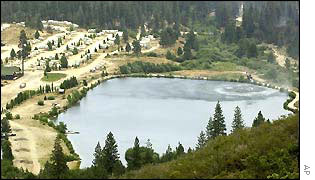 The fire has burned thousands of acres of national park
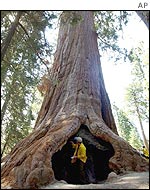
They grow taller than the Statue of Liberty, are wider than a bus and can live for more than 3,000 years. Now more than 100 of the seemingly invulnerable giant sequoia trees are threatened with destruction by a fire that started in California on Sunday and quickly blew out of control.
They have been described as "priceless", a "work of ages" and have captured the imagination of all who have encountered them. Although California's redwoods are the tallest trees in the world, sequoias are the largest overall. They measure up to 10 metres in diameter and weigh as much as 600 tonnes. Those threatened by the flames are more than 100 metres high and between 300 and 1,300 years old. Fireproof Part of the longevity of giant sequoias in an area prone to wildfires is due to the fact that they are among the most fire-resistant conifers in the world. The bark - which can be almost a metre thick - is able to withstand low-intensity fires. Some bear burn scars that are centuries old.
Giant sequoia's have a shallow root network, which if severely damaged, could result in the tree toppling over. "If a fire of high intensity burns along the root line, the soil will dry out and the tree could fall over," David Barna, chief of public affairs of the US National Park Service, told BBC News Online. Controlled burning Similarly, if the flames were to reach the wide branches some 30 to 60 metres above the forest floor, the tree could die. Mr Barna added that in the threatened area of the Sequoia National Monument, there was an alarming build up of dense underbrush and small trees.
"There hasn't been a fire in this area for at least 100 years, which has contributed to the build up of underbrush," he said. "We frequently carry out controlled burning - partly to thin out the dense undergrowth, but there is a backlog and we hadn't reached the area that is now threatened," he said. Coniferous forests have long been subject to a frequent regime of low-intensity fires, which some argue play an important role in reducing dense regrowth of underbrush. But the process is controversial. In the past, low-intensity fires have been known to get out of control. Mr Barna said that while the giant sequoia could withstand low-intensity fires, there were indications that high-intensity fires were on the increase. "Towns are expanding and more and more people are building recreational homes in previously uninhabited areas," he said. "People don't clear up after themselves properly and there is always a lot of fuel left around. "We are set for real destruction in the West." | |
Internet links:  The BBC is not responsible for the content of external internet sites Top Americas stories now: Links to more Americas stories are at the foot of the page. | |||||||||||||||||||||||||||||||||||||||||||||||||||||||||||||||||||||||||||||||||||||||||||||||||||||||||||||||||||||||||||||||||||||||||||||||||||||||||||||||||||||||||||||||||||||||||||||||||||||||||||
| |
|  E-mail this story to a friend E-mail this story to a friend |
| |
| Links to more Americas stories |
| | | ||
 | ||||
 | | Back to top
| ||
| ---------------------------------------------------------------------------------- To BBC Sport>> | To BBC Weather>> | To BBC World Service>> ---------------------------------------------------------------------------------- © MMIII | News Sources | Privacy |