|
 |
 | | | | | | |||||||||||||||||||||||||||||||||||||||||||||||||||||||||||||||||||||||||||||||||||||||||||||||||||||||||||||||||||||||||||||||||||||||||||||||||||||||||||||||||||||||||||||||||||
| | | You are in: Americas | |||||||||||||||||||||||||||||||||||||||||||||||||||||||||||||||||||||||||||||||||||||||||||||||||||||||||||||||||||||||||||||||||||||||||||||||||||||||||||||||||||||||||||||||||||||
|
| | Monday, 15 July, 2002, 14:46 GMT 15:46 UK How flexible is the American military? 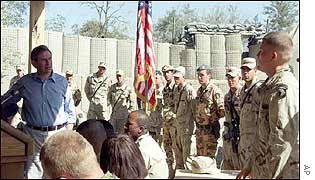 US troops are playing a key part in post-war Afghanistan
The US Deputy Defence Secretary Paul Wolfowitz has said that US troops may be in Afghanistan for "quite some time to come".
But Iraq too is clearly on the Bush Administration's mind. So, could the Pentagon mount an operation against Iraq while still maintaining its commitments in Afghanistan? 'Long-term commitment' America's founding fathers were eager to ensure that the country remained free from foreign entanglements and their advice seems to have left an indelible mark on today's Pentagon.
Despite having the most powerful military machine in the world, US military planners react with horror to the idea that their forces may be tied down in peacekeeping or other long-term operations in different parts of the globe. The Pentagon likes to think that its armed forces are the tip of the military spear. It prefers to leave nation-building to its allies. But it is clear to all shades of US opinion that some long-term military commitment is going to be needed in Afghanistan. While the UN-backed peacekeeping force may well have to remain in Kabul for some time, its sphere of action is limited. It would have to call upon US commanders if its troops ran into serious trouble. 'In short supply' A lengthy US presence in Afghanistan does not preclude though the mounting of large-scale operations elsewhere. But US operations in Afghanistan have depended heavily upon special forces and specialised intelligence gathering systems like unmanned aerial vehicles. Both of these assets are in short supply. And both will be essential for any campaign against Iraq. The Pentagon needs to get its Afghan operation just ticking over so that it can focus its attention elsewhere. That should not be too problematic given that many key Taleban and al-Qaeda leaders are thought to have fled into the tribal areas of Pakistan. But it is increasingly clear that a global campaign against international terrorism is going to require some lengthy overseas deployments whether the Pentagon likes it or not. There is already discussion about what might happen if Saddam Hussein were chased from power - how long would US forces have to stay in Iraq? | |
See also:  11 May 02 | Americas 05 Mar 02 | Americas 02 Jul 02 | South Asia 15 Jul 02 | Middle East 13 Feb 02 | Americas Internet links: The BBC is not responsible for the content of external internet sites Top Americas stories now: Links to more Americas stories are at the foot of the page. | |||||||||||||||||||||||||||||||||||||||||||||||||||||||||||||||||||||||||||||||||||||||||||||||||||||||||||||||||||||||||||||||||||||||||||||||||||||||||||||||||||||||||||||||||||
| |
|  E-mail this story to a friend E-mail this story to a friend |
| |
| Links to more Americas stories |
| | | ||
 | ||||
 | | Back to top
| ||
| ---------------------------------------------------------------------------------- To BBC Sport>> | To BBC Weather>> | To BBC World Service>> ---------------------------------------------------------------------------------- © MMIII | News Sources | Privacy |