|
 |
 | | | | | | ||||||||||||||||||||||||||||||||||||||||||||||||||||||||||||||||||||||||||||||||||||||||||||||||||||||||||||||||||||||||||||||||||||||||||||||||||||||||||||||||||||||||||||
| | | You are in: Americas | ||||||||||||||||||||||||||||||||||||||||||||||||||||||||||||||||||||||||||||||||||||||||||||||||||||||||||||||||||||||||||||||||||||||||||||||||||||||||||||||||||||||||||||||
|
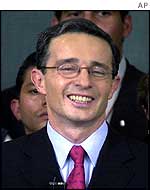
| | Monday, 17 June, 2002, 20:55 GMT 21:55 UK UN 'to explore' Colombia peace role The civil war claims thousands of lives every year Colombia's president-elect Alvaro Uribe and UN Secretary General Kofi Annan have said they will explore ways to end the conflict in Colombia in the coming months. Following a meeting at the United Nations headquarters, in New York, Mr Uribe issued a statement saying the UN "may lend positive contributions" to ending the violence.
Mr Uribe had previously asked the UN to play a role in restarting peace talks with left-wing rebels, who have been fighting the government for decades. The president-elect refused to answer reporters' questions, saying only that "several topics were evaluated" at the meeting, and that he and Mr Annan would "continue to explore the possibilities as discussed". Mr Annan's office said the two men "had a useful exchange [on ideas] for advancing peace in the country". Mr Uribe - who has promised to adopt a hardline with rebel groups - is in the United States on his first international visit since winning a landslide victory in the May elections. US aid The Colombian leader is due to meet senior members of the Bush administration and congressional leaders in Washington over the next few days.
Mr Uribe wants Washington to lift restrictions on US military aid, currently limited to the fight against drugs, to allow the Colombian Government to use it in its 38-year battle against rebel groups. Talks with the largest left-wing rebel group, the Revolutionary Armed Forces of Colombia (FARC), broke down in February after three years of negotiations. Mr Uribe has said he is willing to talk to the insurgents if they first declare a ceasefire and an end to hostilities. Tough questions Analysts say Mr Uribe's success in securing more US aid will depend on whether he can convince legislators that his government will crack down on right-wing paramilitary groups.
Paramilitary groups have been accused of killing more than 1,000 unarmed people last year. Mr Uribe's critics say they were allowed to flourish in his home province of Antioquia when he was governor there in the mid-1990s. The Colombian president-elect is also likely to face tough questions about how he intends to improve the efficiency of a US-backed programme to fight drug production and trafficking. The US has backed Plan Colombia with $1.7bn in mostly military aid over the past two years, but analysts say production has not decreased. Earlier this month, Colombian authorities began investigating 60 police officers, after $2m in US funds disappeared. | |
See also:  09 May 02 | Americas 27 May 02 | Americas 28 May 02 | Media reports 18 Apr 02 | Americas Internet links: The BBC is not responsible for the content of external internet sites Top Americas stories now: Links to more Americas stories are at the foot of the page. | ||||||||||||||||||||||||||||||||||||||||||||||||||||||||||||||||||||||||||||||||||||||||||||||||||||||||||||||||||||||||||||||||||||||||||||||||||||||||||||||||||||||||||||
| |
|  E-mail this story to a friend E-mail this story to a friend |
| |
| Links to more Americas stories |
| | | ||
 | ||||
 | | Back to top
| ||
| ---------------------------------------------------------------------------------- To BBC Sport>> | To BBC Weather>> | To BBC World Service>> ---------------------------------------------------------------------------------- © MMIII | News Sources | Privacy |