
|
 |
 | | | | | | |||||||||||||||||||||||||||||||||||||||||||||||||||||||||||||||||||||||||||||||||||||||||||||||||||||||||||||||||||||||||||||||||||||||||||||||||||||||||||||||||||||||||||||||||||||||||||||||||||||||||||||||||
| | | You are in: Americas | |||||||||||||||||||||||||||||||||||||||||||||||||||||||||||||||||||||||||||||||||||||||||||||||||||||||||||||||||||||||||||||||||||||||||||||||||||||||||||||||||||||||||||||||||||||||||||||||||||||||||||||||||||
|
| | Monday, 17 June, 2002, 14:49 GMT 15:49 UK Bush and Saddam: Unfinished business Saddam Hussein is surrounded by loyal colleagues
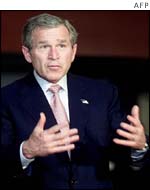
President George Bush's latest directive to the Central Intelligence Agency - overthrow or capture Saddam Hussein if you can - is a sharp reminder that the Iraqi leader is unfinished business for the American president. Mr Bush has not authorised an assassination, but just about everything short of that.
That suggests that a snatch operation at some stage is not ruled out. But other methods will be tried, ranging from supporting opposition groups to encouraging a coup. This is much the preferred American option. Strong leadership But the CIA reportedly does not hold out much hope that the Iraqi president can be overthrown by indirect methods. The chances are put at 10-20%, unless they get "lucky". Iraq is not like Afghanistan. There is no regime on the run, as the Taleban was. There is no powerful ally to hand, as there was in the Northern Alliance. Saddam Hussein is strong and ruthless. He controls skilled security services and a disciplined army.
The Iraqi leader is personally well protected. He has many palaces which are, in effect, his fortresses. Therefore, a direct invasion remains very much a possibility in due course. If he is still in power towards the end of this year, look for a decision by George Bush not long afterwards. It is not the preferred option, but it might become the only option. It would not be popular with many of America's allies, but the White House hopes that some countries which object now will accept later. Score to settle President Bush's determination to succeed where his father failed is strong and not to be underestimated. He regards the removal of his adversary ("regime change" in the jargon) as a major goal of his first term of office and something which will help get him re-elected for a second. I asked Mr Bush about this during the presidential election campaign. Would he, I wondered, seek to get rid of Saddam Hussein? He paused, leaned forward, looked me in the eye and with his familiar smirk responded: "Good question".
It is based on pre-emption, not reaction. The New York Times says that George Bush has ordered his foreign policy team to draw up a new doctrine for his approval later this summer. Mr Bush himself foreshadowed the policy in a speech to the military academy at West Point two weeks ago, when he said: "If we wait for threats to fully materialise, we will have waited too long." Condoleezza Rice, the president's national security adviser and someone who has his ear, said recently: "It means forestalling certain destructive acts against you by an adversary." Going it alone The policy would be aimed at groups and states which are trying to develop weapons of mass destruction. Iraq would fall within such a group, in the American assessment. One official is quoted as saying that some weak states have become "Petri dishes" for the incubation of terrorist groups. What is notable about this new American interventionism is the way it bypasses the United Nations. Like it or not, Washington has no patience for the UN. The United States has its own intelligence, its own forces - and is prepared to act on its own. It would sometimes seek allied help, including Russian help. But it would not depend on such help. To some, this means going back to the days of big power politics, even to the 19th century when states made determinations of what threats they faced and acted as they saw fit. And they often saw fit to be aggressive. The UN charter was supposed to lead to an era of collective action. It allows individual states to act only in self defence, though that is not defined. Washington is going to define it very widely. The policy can be called unilateralism, it can be called aggression, it can be called assuming responsibility. It has to be called a fact. | |

 See also: 17 Jun 02 | Middle East 07 Jun 02 | Middle East 24 May 02 | Americas 22 May 02 | Americas 29 Apr 02 | Middle East Internet links: The BBC is not responsible for the content of external internet sites Top Americas stories now: Links to more Americas stories are at the foot of the page. | |||||||||||||||||||||||||||||||||||||||||||||||||||||||||||||||||||||||||||||||||||||||||||||||||||||||||||||||||||||||||||||||||||||||||||||||||||||||||||||||||||||||||||||||||||||||||||||||||||||||||||||||||
| |
|  E-mail this story to a friend E-mail this story to a friend |
| |
| Links to more Americas stories |
| | | ||
 | ||||
 | | Back to top
| ||
| ---------------------------------------------------------------------------------- To BBC Sport>> | To BBC Weather>> | To BBC World Service>> ---------------------------------------------------------------------------------- © MMIII | News Sources | Privacy |










 48.06%
  51.94%