|
 |
 | | | | | | |||||||||||||||||||||||||||||||||||||||||||||||||||||||||||||||||||||||||||||||||||||||||||||||||||||||||||||||||||||||||||||||||||||||||||||||||||||||||||||||||||||||||||||
| | | You are in: Americas | |||||||||||||||||||||||||||||||||||||||||||||||||||||||||||||||||||||||||||||||||||||||||||||||||||||||||||||||||||||||||||||||||||||||||||||||||||||||||||||||||||||||||||||||
|
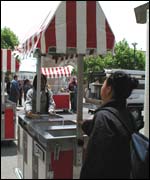
| | Thursday, 30 May, 2002, 17:45 GMT 18:45 UK Junk food battle hits US schools Some schools are banning junk food
Obesity is about to get cut down to size as America declares it public enemy number one. Everyone from Congress to the surgeon general is weighing in with legislation and programmes to improve the nation's eating habits. The Internal Revenue Service is even allowing all Americans deemed as obese to be able to write off costs for weight-loss plans as a genuine medical expense.
Brian McKibben is the principal at Oakland's biggest school, Fremont High where soda, candy, caffeinated drinks and other similar products are no longer sold on campus. Overweight, out of shape "Since I am recovering from heart disease myself, I am very sensitive to both diet and exercise, and anything we can do to make it better for the kids, I want to do," says Mr McKibben. The motivation for the move is simple. A recent survey shows that California, with its image of bronzed, buffed bodies, has a hefty student population.
Nationwide, the land of the free boasts 54 million obese adults, that's people who are 30 or more pounds over the healthy norm based on height. Health groups say one of the biggest culprits for this growing epidemic is junk food, and that the best time to break the cycle between obesity and bad eating habits is when people are young. Mikel Calderon, a 16-year-old Fremont High student, backs his school's ban. Sugar free "Even though most people go for junk food, I think it's better to get them out of eating potato chips and sodas and turning their bodies into a mess," he says. "I think everyone should be concerned."
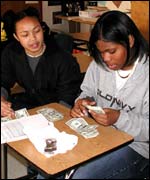
"What we are doing is good," says 16-year-old Carlo Perez, who helps run the business through the school's Students In Free Enterprise programme. "Just look around here. There are a lot of fat people everywhere." Fellow student David Ingrams disagrees. "Junk food is good for the body. You can't live without junk food in your life. Who lives on vegetables every day?" Limited success With such attitudes common among teenagers raised in a fast food culture, Business Academy assistant director Amy Carpenter says education is the way forward. "Just saying 'eat this' and 'don't eat that' kind of creates a whole air of prohibition about it so that maybe that candy and that soda pop becomes even more desirable," she says.
Fremont High's attempts to trim its student body is only having limited success. Around 200 teenagers tuck into the healthy low-fat fare, which generally sells out every day. And the cafeteria can only cater for another 100 pupils. That means there's 1400 students with nowhere else to go but the nearest corner market for cookies and soda or the local Burger King for fries. Costing dearly Ms Carpenter admits this does slightly defeat the purpose of their junk food ban. "That's one of the reasons we are looking are partnering with peer health educators to change the minds of our consumers and create a bigger market so that we can sell healthy food to more kids as an alternative."
The Centre for Consumer Freedom lambasts Oakland's ban as the most extreme in the nation. And spokesman John Doyle claims: "They can eliminate everything they want and it will not do one thing to curb obesity. You cannot mandate fat away." Efforts to slim down Oakland's students could cost the district dearly. Nationwide, fast food contracts bring in around $750m a year. Oakland's ban will cost roughly $650,000, with individual schools losing around $200,000 of much needed money that is often spent on field trips and sports. But Fremont's Principal Brian McKibben says this fight is about more than dollars and cents. "There are some real issues here that involve corporate greed. What is more important? The bottom line for the corporation in terms of its profit or the health of human beings? "That's a real concern for me." | | Internet links:  The BBC is not responsible for the content of external internet sites Top Americas stories now: Links to more Americas stories are at the foot of the page. | |||||||||||||||||||||||||||||||||||||||||||||||||||||||||||||||||||||||||||||||||||||||||||||||||||||||||||||||||||||||||||||||||||||||||||||||||||||||||||||||||||||||||||||
| |
|  E-mail this story to a friend E-mail this story to a friend |
| |
| Links to more Americas stories |
| | | ||
 | ||||
 | | Back to top
| ||
| ---------------------------------------------------------------------------------- To BBC Sport>> | To BBC Weather>> | To BBC World Service>> ---------------------------------------------------------------------------------- © MMIII | News Sources | Privacy |