|
 |
 | | | | | | ||||||||||||||||||||||||||||||||||||||||||||||||||||||||||||||||||||||||||||||||||||||||||||||||||||||||||||||||||||||||||||||||||||||||||||||||||||||||||||||||||||||||||
| | | You are in: Americas | ||||||||||||||||||||||||||||||||||||||||||||||||||||||||||||||||||||||||||||||||||||||||||||||||||||||||||||||||||||||||||||||||||||||||||||||||||||||||||||||||||||||||||||
|
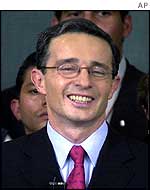
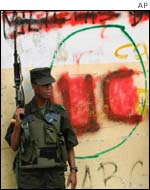
| | Wednesday, 29 May, 2002, 00:31 GMT 01:31 UK UN considers Colombia role Armed groups control much of Colombia's countryside The United Nations is to consider a request by the new president-elect of Colombia, Alvaro Uribe, to mediate in efforts to end the country's long-running civil war. UN spokesman Fred Eckhard said in New York on Tuesday: "The United Nations has been supporting peace efforts in Colombia, and will examine with care and interest president-elect Alvaro Uribe's proposals regarding a future role for the organisation in new peace efforts."
During his campaign, he promised voters he would adopt a tough policy to try to bring left-wing rebel groups and rightwing paramilitaries to the negotiating table. Calls for help After his electoral victory, Mr Uribe called on the United States to help fight drug traffickers and block arms shipments to the illegal armed groups. He also urged the United Nations to help mediate with the left-wing rebels in an attempt to end almost four decades of violence, which has seen more than 200,000 Colombians killed. The incumbent President, Andres Pastrana, devoted much of his four years in office to trying to bring the main guerrilla group, the Revolutionary Armed Forces of Colombia (FARC) to the negotiating table.
It was mediation by the United Nations which helped end years of civil war in the Central American countries of El Salvador and Guatemala in the 1990s. But local analysts say both the left-wing groups and the paramilitaries have used the Pastrana presidency to build up recruits and weaponry. Financed increasingly by the drug traffickers and by money from kidnappings, they see little reason to talk to the new government. Position of strength Mr Uribe, who will succeed President Pastrana in August, has said he will increase spending on the armed forces and double the number of professional soldiers, in an attempt to force the rebels to the negotiating table.
"Maybe we shouldn't be too optimistic about their agreeing to international mediation to restart a process in the near future." | |
See also:  27 May 02 | Americas 27 May 02 | Americas 27 May 02 | Americas Internet links: The BBC is not responsible for the content of external internet sites Top Americas stories now: Links to more Americas stories are at the foot of the page. | ||||||||||||||||||||||||||||||||||||||||||||||||||||||||||||||||||||||||||||||||||||||||||||||||||||||||||||||||||||||||||||||||||||||||||||||||||||||||||||||||||||||||||
| |
|  E-mail this story to a friend E-mail this story to a friend |
| |
| Links to more Americas stories |
| | | ||
 | ||||
 | | Back to top
| ||
| ---------------------------------------------------------------------------------- To BBC Sport>> | To BBC Weather>> | To BBC World Service>> ---------------------------------------------------------------------------------- © MMIII | News Sources | Privacy |