 One in three people in southern Africa is infected with the virus |
Leaders from southern Africa are meeting in Lesotho to discuss ways of fighting the HIV and Aids epidemic that is devastating the region. It is the first time the regional forum, the Southern Africa Development Community, has focused on the HIV crisis. One in three people in southern Africa is now infected with the virus.
The United Nations says that nearly 4,000 people die of Aids-related illnesses in Zimbabwe each week, and in Swaziland almost 40% of mothers are HIV-positive.
Facts and figures on the impact of HIV in sub-Saharan Africa 
|
The only presidents attending the Lesotho meeting are Angola's Jose Eduardo dos Santos, Festus Mogae from Botswana and Zimbabwe's Robert Mugabe. Other countries are sending vice-presidents or senior officials.
A BBC Africa Correspondent says despite the severity of the HIV crisis, southern African heads of state have been reluctant to make it their top priority.
Aid initiative
US President George W Bush has said that he hopes his trip to Africa next week will help raise Americans' awareness of the HIV/Aids toll abroad.
"It's important for our fellow citizens to realize that while we live a relatively luxurious life throughout our society, there's a pandemic that's destroying a lot of people, ruining families," he said. Mr Bush has proposed a five-year, $15bn initiative to help combat and treat Aids in Africa and the Caribbean.
By promoting the proposal in Africa, Bush said he also hoped to boost awareness of the disease in America.
Earlier this week the United Nations World Food Programme warned that the HIV/Aids pandemic was the single biggest factor undermining economic recovery in southern Africa.
Productivity in the agricultural sector is the hardest hit by the spread of Aids, which leads to ongoing food shortages.
Unaffordable drugs
If current Aids trends continue in Southern Africa, it is predicted that life expectancy will fall below 30 years of age by 2010 - a level not seen in developed countries since medieval times.
Meanwhile, an international study of the treatment of HIV and Aids suggests that the correct use of the latest drugs has had a marked impact in reducing deaths and illness.
AIDS IN AFRICA Africa's growing epidemic
|
Nearly 10,000 patients in Europe, Israel and Argentina took part in the study, comparing previous treatments with the latest method, in which at least three powerful drugs are used to prevent the HIV virus from overwhelming the immune system. The research (published in the British medical journal The Lancet) shows that the new system, known as Highly-Active Anti-Retroviral Therapy, has reduced death and illness rates by up to 50%.
But the study emphasises that for most patients in poor countries, the latest drugs are either unavailable or unaffordable.


 One-Minute World News
  News services


 E-mail this to a friend
  Printable version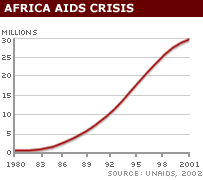
 At-a-glance

 In Maps