|
 |
 | | | | | | ||||||||||||||||||||||||||||||||||||||||||||||||||||||||||||||||||||||||||||||||||||||||||||||||||||||||||||||||||||||||||||||||||||||||||||||||||||||||||||||||||||||||
| | | You are in: Africa | ||||||||||||||||||||||||||||||||||||||||||||||||||||||||||||||||||||||||||||||||||||||||||||||||||||||||||||||||||||||||||||||||||||||||||||||||||||||||||||||||||||||||||
|
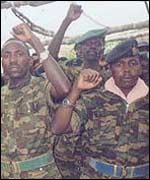
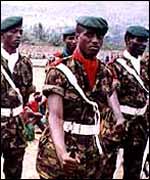
| | Friday, 14 February, 2003, 10:59 GMT Exiled Burundi rebels go home  South African troops are in Burundi to guarantee the security of Hutu politicians The leaders of two smaller Hutu rebel groups in Burundi have returned to their country after years in exile to implement a ceasefire agreement they signed with the government last October. Jean-Bosco Ndayikengurukiye and Alain Mugarabona arrived in the capital, Bujumbura, on Thursday evening from South Africa where they attended talks on the restructuring of the army and distribution of cabinet posts.
The main branch of the Front for Defence of Democracy (FDD), one of the two main rebel groups, signed a ceasefire agreement with the government in December last year. A power-sharing agreement between ethnic Hutus and Tutsis, brokered by former South African President Nelson Mandela, has failed to end the fighting which has been going on for a decade. Under the terms of the agreement, Tutsi President Pierre Buyoya is due to stand down in May and be replaced by his Hutu vice president. The rebels say that having Hutu ministers and even a president means nothing while the army is still dominated by the Tutsi minority. Ceasefire Mr Mugabarabona is back in Burundi after years of exile in The Netherlands, while Mr Ndayikengurukiye spent most of his time in neighbouring Congo and Tanzania.
The two say they are serious about implementing the ceasefire agreement. "I am very pleased because now I am returning to implement the ceasefire agreement, which is the only instrument that will stop the war in Burundi," Mr Ndayikengurukiye said. "We are going to keep our promise," Alain Mugabarabona said. Peace force Our correspondent says that the next step will be the inclusion of rebel representatives in Burundi's institutions. A reform of the armed forces is also planned, as Hutus say they have been excluded from the army.
The security of the two returnees and more than 100 staff is to be guaranteed by 700 South African troops deployed in Burundi in November 2001 to look after the security of Hutu politicians. South Africa, Mozambique and Ethiopia have promised to contribute soldiers to an African peace force by early February, but so far only eight Togolese observers have arrived in Burundi. More than 300,000 people, mainly civilians, have been killed in the 10-year civil war in Burundi. | |
See also:  28 Jan 03 | Africa 22 Jan 03 | Africa 15 Jan 03 | Africa 14 Jan 03 | Africa 13 Jan 03 | Africa 16 Dec 02 | Africa Internet links: The BBC is not responsible for the content of external internet sites Top Africa stories now: Links to more Africa stories are at the foot of the page. | ||||||||||||||||||||||||||||||||||||||||||||||||||||||||||||||||||||||||||||||||||||||||||||||||||||||||||||||||||||||||||||||||||||||||||||||||||||||||||||||||||||||||
 | |
|  E-mail this story to a friend E-mail this story to a friend |
| |
| Links to more Africa stories |
| | | ||
 | ||||
 | | Back to top
| ||
| ---------------------------------------------------------------------------------- To BBC Sport>> | To BBC Weather>> | To BBC World Service>> ---------------------------------------------------------------------------------- © MMIII | News Sources | Privacy |





 It's very easy to start war, but very difficult to stop it