|
 |
 | | | | | | ||||||||||||||||||||||||||||||||||||||||||||||||||||||||||||||||||||||||||||||||||||||||||||||||||||||||||||||||||||||||||||||||||||||||||||||||||||||||||||||||
| | | You are in: Africa | ||||||||||||||||||||||||||||||||||||||||||||||||||||||||||||||||||||||||||||||||||||||||||||||||||||||||||||||||||||||||||||||||||||||||||||||||||||||||||||||||||
|
| | Thursday, 13 February, 2003, 15:11 GMT Mammals 'sailed to Madagascar'  The aye-aye is one of the island's unique species All mammals on the island of Madagascar are descended from four ancestral species that sailed from Africa clinging to rafts of plant material, scientists have said.
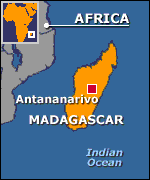
Madagascar - which split from the African mainland - has been isolated for about 88 million years. Scientists have been mystified about the origins of the 100-odd unique terrestrial species of mammals living there. They belong to four main groups - carnivores, lemurs, rodents and hedgehog-like insect eaters called tenrecs. New research suggests that all are descendants of four ancestors that somehow survived the 400-kilometre (250-mile) sea journey from the mainland. A team led by John Flynn, of the Field Museum of Natural History in Chicago, found that the carnivores evolved from a mongoose-like creature that floated to Madagascar about 21 million years ago.
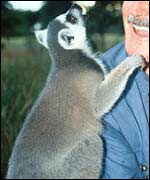
The research, published in this week's Nature journal, says the island's carnivorous mammals are not old enough to have been present when Madagascar split from Africa. "That leaves us with this alternative hypothesis of being swept out to sea and managing to survive this rather extraordinary voyage," said Anne Yoder of Yale University, a co-author of the paper. Ancient mariners An earlier genetic study by Professor Yoder showed lemurs also shared a common ancestor, which arrived on Madagascar more than 62 million years ago. The researchers have yet to date the arrival of the rodents or tenrecs - but Professor Flynn believes that they too are each descended from a single species.
"All 100 or so known species of terrestrial mammals native to Madagascar... can now be explained by only four colonisation events," Professor Flynn said. He believes the animals must have ridden on large clumps of plant material, as other creatures have over shorter distances. Madagascar is the world's fourth largest island. Most of its 200,000 species of plants and animals are found nowhere else. | | See also:  16 Jan 02 | Africa 14 Nov 00 | Science/Nature 15 May 98 | Science/Nature 17 Aug 01 | Country profiles Internet links: The BBC is not responsible for the content of external internet sites Top Africa stories now: Links to more Africa stories are at the foot of the page. | ||||||||||||||||||||||||||||||||||||||||||||||||||||||||||||||||||||||||||||||||||||||||||||||||||||||||||||||||||||||||||||||||||||||||||||||||||||||||||||||||
 | |
|  E-mail this story to a friend E-mail this story to a friend |
| |
| Links to more Africa stories |
| | | ||
 | ||||
 | | Back to top
| ||
| ---------------------------------------------------------------------------------- To BBC Sport>> | To BBC Weather>> | To BBC World Service>> ---------------------------------------------------------------------------------- © MMIII | News Sources | Privacy |





 All 100 or so known species of terrestrial mammals native to Madagascar... can now be explained by only four colonisation events