|
 |
 | | | | | | |||||||||||||||||||||||||||||||||||||||||||||||||||||||||||||||||||||||||||||||||||||||||||||||||||||||||||||||||||||||||||||||||||||||||||||||||||||||||||||||||||||||||
| | | You are in: Africa | |||||||||||||||||||||||||||||||||||||||||||||||||||||||||||||||||||||||||||||||||||||||||||||||||||||||||||||||||||||||||||||||||||||||||||||||||||||||||||||||||||||||||||
|
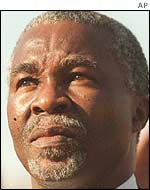
| | Friday, 7 February, 2003, 18:20 GMT Living in Mandela's shadow  Mbeki lacks Mandela's warmth and charisma
The recent conference of the African National Congress was a chance for President Mbeki to outline his vision of South Africa's future, before the party faithful, and a national television audience. But halfway through President Mbeki's speech there was an interruption.
President Mbeki, visibly irritated, had to wait for several minutes before the clamour died down and he could resume his speech. It was a telling moment - a cruel reminder for President Mbeki that he does not have, and never will have Nelson Mandela's personal touch. Ranjeni Munusamy, a political reporter for the Johannesburg Sunday Times, says President Mbeki is often stiff and awkward. "There have been times when he has had to do public appearances on television in the presence of children and he has been so uncomfortable." She says that Mr Mbeki's appearances are very businesslike and all about work. "It has nothing to do with the romanticism and the sentiment that defined the Mandela presidency" Aids But the differences are not just of style, but also of substance.
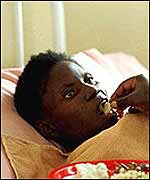
But President Mbeki is strangely uncommitted - he doubts the link between HIV and Aids, and he questions the value of anti-retroviral drugs. Nelson Mandela, on the other hand, has thrown himself into the fight against Aids. During a highly symbolic visit by Nelson Mandela to meet Aids campaigners, who are openly critical of President Mbeki, Mr Mandela showed support, and voiced his concern. "What worries everybody is the number of people who are dying - almost daily." It is an unremarkable comment - but when President Mbeki is so reluctant to talk about Aids at all, it is significiant. Mark Heywood, a leading Aids activist, welcomes Nelson Mandela's approach. "He knows there is a very big difference between what he is saying and what the president is saying," he said.
Private differences are unlikely to lead to public disputes between the two men. Nelson Mandela is too loyal to the ANC, whilst President Mbeki is too aware of Mr Mandela's enduring populatity, to risk an open spat. But that will not stop South Africans from gossiping and speculating on the tensions between President Mbeki, and former President Mandela. | | See also:  17 Dec 02 | Africa 07 Feb 02 | Africa 05 Jul 02 | Africa 25 Apr 01 | Africa 24 Jul 01 | Africa 28 Nov 02 | Country profiles 28 Nov 02 | Africa Internet links: The BBC is not responsible for the content of external internet sites Top Africa stories now: Links to more Africa stories are at the foot of the page. | |||||||||||||||||||||||||||||||||||||||||||||||||||||||||||||||||||||||||||||||||||||||||||||||||||||||||||||||||||||||||||||||||||||||||||||||||||||||||||||||||||||||||
 | |
|  E-mail this story to a friend E-mail this story to a friend |
| |
| Links to more Africa stories |
| | | ||
 | ||||
 | | Back to top
| ||
| ---------------------------------------------------------------------------------- To BBC Sport>> | To BBC Weather>> | To BBC World Service>> ---------------------------------------------------------------------------------- © MMIII | News Sources | Privacy |






 He knows there is a very big difference between what he is saying and what the president is saying