|
 |
 | | | | | | ||||||||||||||||||||||||||||||||||||||||||||||||||||||||||||||||||||||||||||||||||||||||||||||||||||||||||||||||||||||||||||||||||||||||||||||||||||||||||||||||||||||||||||||||||||||||||||||||||||||||
| | | You are in: Africa | ||||||||||||||||||||||||||||||||||||||||||||||||||||||||||||||||||||||||||||||||||||||||||||||||||||||||||||||||||||||||||||||||||||||||||||||||||||||||||||||||||||||||||||||||||||||||||||||||||||||||||
|
| | Thursday, 16 January, 2003, 17:12 GMT Uganda factory profits from US markets  Thousands of jobs have been created in Uganda
It exports agricultural produce, leather goods and has just started exporting clothes to the United States.
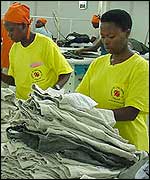
The Sri Lankan-owned Tristar textile factory in Kampala employs over 1,000 girls drawn from every corner of Uganda. Each day they produce 4,000 pairs of shorts for export to the United States. This factory would not have been set up if it had not been for the removal of American tariffs on textiles. Free accommodation For Ugandan president Yoweri Museveni, who is keen to see the country industrialise, the importance of Agoa cannot be overstated: "Agoa is the biggest opportunity for Africa since independence. That's not a small statement. This one is a chance to develop. "Let anyone who claims to be speaking about public affairs know that the future belongs to industrialisation, to modernisation. Not to maintaining this backward raw material economy which we have been having here," he told the BBC.
Job opportunities in Uganda are scarce, so when offers of training and employment are announced there is no shortage of candidates. Grace Chalimo left her home in Kapchorwa, in the east of the country, and headed for Kampala to work in the Tristar factory. She receives free accommodation and food and while she earns as little as 20 US cents an hour, Grace now finds herself the breadwinner in the family: "My father passed away and I have two sisters. Now they are schooling. "When I get money from here, the little money I send back to Kapchorwa to help my sisters bring them up. But yet that money is little. It can't help all of them," she said. And even though the pay packets are small, jobs are being created. Now, Uganda needs to transform its economy from one that has been reliant on donor funding. As a Ugandan official put it: "Reliance on aid money is like having Uganda's economy in hospital on a drip. And Agoa is a chance to get off that drip and see the country trade its way out of poverty." | |
See also:  16 Jan 03 | Business 15 Jan 03 | Business 06 Dec 02 | Business 04 Dec 02 | Africa 11 Jan 03 | Country profiles 20 Nov 02 | Country profiles Internet links: The BBC is not responsible for the content of external internet sites Top Africa stories now: Links to more Africa stories are at the foot of the page. | ||||||||||||||||||||||||||||||||||||||||||||||||||||||||||||||||||||||||||||||||||||||||||||||||||||||||||||||||||||||||||||||||||||||||||||||||||||||||||||||||||||||||||||||||||||||||||||||||||||||||
 | |
|  E-mail this story to a friend E-mail this story to a friend |
| |
| Links to more Africa stories |
| | | ||
 | ||||
 | | Back to top
| ||
| ---------------------------------------------------------------------------------- To BBC Sport>> | To BBC Weather>> | To BBC World Service>> ---------------------------------------------------------------------------------- © MMIII | News Sources | Privacy |






 Agoa is the biggest opportunity for Africa since independence