
|
 |
 | | | | | | ||||||||||||||||||||||||||||||||||||||||||||||||||||||||||||||||||||||||||||||||||||||||||||||||||||||||||||||||||||||||||||||||||||||||||||||||||||||||||||||||||||||||||||||||||||||||||||||||||
| | | You are in: Africa | ||||||||||||||||||||||||||||||||||||||||||||||||||||||||||||||||||||||||||||||||||||||||||||||||||||||||||||||||||||||||||||||||||||||||||||||||||||||||||||||||||||||||||||||||||||||||||||||||||||
|
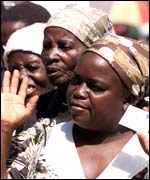
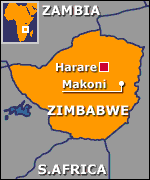
| | Thursday, 2 January, 2003, 13:09 GMT Zimbabweans talk food not cricket  120,000 Zimbabweans in Makoni rely on food aid The row over whether England plays a World Cup cricket match in Harare is lost on the many Zimbabweans who are struggling to survive, as Luis Clemens from the World Food Programme reports. The distribution of relief food takes place on a field the size of a cricket pitch. Food, not sport, dominates the conversations here in Makoni District, Zimbabwe. There is also talk of fertilizer, seed and rain. These are routine topics in any rural community, but of particular relevance to the 879 households receiving relief food for the first time.
The distribution takes place against a backdrop formed by mountains laden with meaning for the assembled villagers. Maunga is where elderly women go to pray to their ancestors for rain. Younger women go to the base of Chimauzvare to drink water when they wish to become pregnant. Over 1500 people assemble to receive their first-ever monthly ration of maize and beans provided by the United Nations World Food Programme (WFP). Outside help This batch of food was donated by the EU, Germany and the US to WFP and is distributed in this district by Goal, an Irish NGO. It is Goal's first distribution in Zimbabwe.
They hope to distribute food provided by donors to some 120,000 people in Makoni District who have no other way of feeding themselves before the next harvest in March. Goal has gone from a staff of one to 110 in a matter of months. Their aim is to link emergency relief with long-term agricultural rehabilitation. "The overall picture is bleak," says Poul Brandrup, Goal country director for Zimbabwe. Much less of the staple maize crop has been planted this year than last and the prospect of rain is uncertain.
Alice Mashonjowa is one of those receiving food aid for the first time. At 17, she cares for six brothers and sisters ranging in age from six to 16. There is no food left from the last crop so they rely on wild vegetables and whatever maize they can afford. '$1 a month' Her 15-year-old brother works as an errand boy and earns the equivalent of $1 a month. That is the family's only steady income. They are able to purchase food sporadically, but they have had to use part of the money destined for school fees. Four of the children are in school, but Alice has not attended since her parents died.
But they planted late in the rainy season because they had to borrow the village head's draught animals to plough their field. It comes as little surprise that there were no Christmas gifts or a big holiday meal at the Mashonjowa household this year. When asked her expectations for the New Year, Alice looks downwards and responds, "at least not to be hungry". | | 
See also: 28 Nov 02 | Africa 07 Nov 02 | Africa 18 Oct 02 | Africa 29 Dec 02 | Cricket 16 Dec 02 | Sports Talk Internet links: The BBC is not responsible for the content of external internet sites Top Africa stories now: Links to more Africa stories are at the foot of the page. | ||||||||||||||||||||||||||||||||||||||||||||||||||||||||||||||||||||||||||||||||||||||||||||||||||||||||||||||||||||||||||||||||||||||||||||||||||||||||||||||||||||||||||||||||||||||||||||||||||
 | |
|  E-mail this story to a friend E-mail this story to a friend |
| |
| Links to more Africa stories |
| | | ||
 | ||||
 | | Back to top
| ||
| ---------------------------------------------------------------------------------- To BBC Sport>> | To BBC Weather>> | To BBC World Service>> ---------------------------------------------------------------------------------- © MMIII | News Sources | Privacy |





 The overall picture is bleak

 28.57%
  71.43%


