|
 |
 | | | | | | ||||||||||||||||||||||||||||||||||||||||||||||||||||||||||||||||||||||||||||||||||||||||||||||||||||||||||||||||||||||||||||||||||||||||||||||||||||||||||||||||||||
| | | You are in: Africa | ||||||||||||||||||||||||||||||||||||||||||||||||||||||||||||||||||||||||||||||||||||||||||||||||||||||||||||||||||||||||||||||||||||||||||||||||||||||||||||||||||||||
|
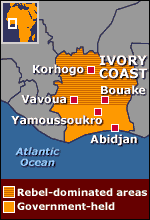
| | Monday, 18 November, 2002, 09:15 GMT Peacekeepers head to Ivory Coast 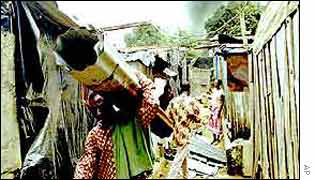 Immigrants have been fleeing the country Nineteen army officers have arrived in Ivory Coast as a vanguard of the West African regional force that will be deployed to oversee a ceasefire between government troops and rebels. The 1,200-strong force from the Economic Community of West African States is to replace the French troops currently there, but it is not known when the regional troops will move in. The force will be made up of soldiers from Benin, Ghana, Niger, Senegal and Togo. Senegal's President Abdoulaye Wade has agreed to contribute 700 soldiers, and his country will lead the force. Peace talks have been taking place in Togo for more than two weeks, but little progress has been made. A French envoy arrived in Lome at the weekend promising to do whatever he could for peace. A mutiny some two months ago, has led to the country being divided in two, with peacekeepers manning a line of control running across the country. The economy is struggling, as supply routes from rebel held cocoa producing areas to southern port cities are blocked. Meanwhile, bus loads of people have been leaving the Ivory Coast, fleeing for their safety. Evacuations Several West African countries have been evacuating their nationals.
Mali is taking home 10,000 people most at risk. The other northern neighbour of Ivory Coast, Burkina Faso, is pulling out 7,000 and Nigeria has already rescued 2,000. But the evacuations will only help a small proportion of immigrant workers. One third of Ivory Coast's population is made up of people drawn from nearby countries to work in the region's strongest economy. There is a steady stream of people leaving by their own means and European embassies have evacuation plans too in case the peace talks break down. The government of Ivory Coast denies that it is targeting foreigners. It says its fight is with the rebels. | |
See also:  16 Nov 02 | Africa 14 Nov 02 | Africa 11 Nov 02 | Africa 10 Nov 02 | Africa 08 Nov 02 | Africa 07 Nov 02 | Africa 06 Nov 02 | Africa Internet links: The BBC is not responsible for the content of external internet sites Top Africa stories now: Links to more Africa stories are at the foot of the page. | ||||||||||||||||||||||||||||||||||||||||||||||||||||||||||||||||||||||||||||||||||||||||||||||||||||||||||||||||||||||||||||||||||||||||||||||||||||||||||||||||||||
| |
|  E-mail this story to a friend E-mail this story to a friend |
| |
| Links to more Africa stories |
| | | ||
 | ||||
 | | Back to top
| ||
| ---------------------------------------------------------------------------------- To BBC Sport>> | To BBC Weather>> | To BBC World Service>> ---------------------------------------------------------------------------------- © MMIII | News Sources | Privacy |