|
 |
 | | | | | | |||||||||||||||||||||||||||||||||||||||||||||||||||||||||||||||||||||||||||||||||||||||||||||||||||||||||||||||||||||||||||||||||||||||||||||||||||||||||||||||||||||
| | | You are in: Africa | |||||||||||||||||||||||||||||||||||||||||||||||||||||||||||||||||||||||||||||||||||||||||||||||||||||||||||||||||||||||||||||||||||||||||||||||||||||||||||||||||||||||
|
| | Saturday, 2 November, 2002, 00:42 GMT Ivory Coast agrees rebel amnesty deal 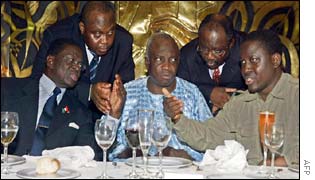 Both sides are under pressure to ease their demands The government of Ivory Coast has agreed to a deal which aims to grant an amnesty to rebels, and reintegrate army mutineers back into the military. The announcement was made by the Foreign Minister of Togo, Koffi Panou, who has led three days of peace talks in the Togolese capital Lome.
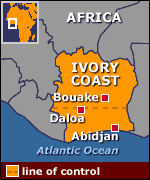
Both sides have also agreed to allow humanitarian aid to reach rebel-held regions and to grant "the immediate release of all civilian and military prisoners of war", according to a statement signed by both parties. The talks were aimed at reaching a peace deal after fighting, sparked by a failed coup in September, split Ivory Coast in two. Key demands The amnesty deal calls for the authorities to "end legal action against people charged with threatening state security" and "to take steps to re-engage" the military contingents which launched the rebellion, said Mr Panou. As part of the draft agreement, soldiers living in exile will be allowed to return home.
But the announcement of the amnesty, late on Friday, made no mention of meeting the rebels' demands for President Laurent Gbagbo to resign and allow fresh elections. Nor did the it address rebel disarmament, a chief demand of the government. The conflict, in the world's most important cocoa producer, has left hundreds dead and intensified ethnic tension between the country's mostly Muslim north - now controlled by rebels - and largely Christian south. The talks, mediated by Togolese President Gnassingbe Eyadema, appeared on the rocks earlier on Friday after two rebel leaders left to return to their stronghold in central Ivory Coast. Failed coup The negotiations have been organised by the West African regional body, Ecowas. They follow a truce in the fighting, which has held for two weeks. As well as the heavy casualties, thousands of people have been driven from their homes during the crisis. Troops from the former colonial power, France, have been acting as a buffer between the two sides. About 2,000 soldiers from eight West African countries are scheduled to arrive for peacekeeping duties within the next two weeks as Ivory Coast's neighbours work to calm the situation. The violence began after a failed coup attempt against the Ivorian president. | |
See also:  01 Nov 02 | Africa 30 Oct 02 | Country profiles 25 Oct 02 | Africa 24 Oct 02 | Africa 23 Oct 02 | Africa 21 Oct 02 | Africa 29 Oct 02 | Africa 18 Oct 02 | Africa Internet links: The BBC is not responsible for the content of external internet sites Top Africa stories now: Links to more Africa stories are at the foot of the page. | |||||||||||||||||||||||||||||||||||||||||||||||||||||||||||||||||||||||||||||||||||||||||||||||||||||||||||||||||||||||||||||||||||||||||||||||||||||||||||||||||||||
| |
|  E-mail this story to a friend E-mail this story to a friend |
| |
| Links to more Africa stories |
| | | ||
 | ||||
 | | Back to top
| ||
| ---------------------------------------------------------------------------------- To BBC Sport>> | To BBC Weather>> | To BBC World Service>> ---------------------------------------------------------------------------------- © MMIII | News Sources | Privacy |