|
 |
 | | | | | | ||||||||||||||||||||||||||||||||||||||||||||||||||||||||||||||||||||||||||||||||||||||||||||||||||||||||||||||||||||||||||||||||||||||||||||||||||||||||||||||||||||||||||||||||||||||||||||||||||||||||
| | | You are in: Africa | ||||||||||||||||||||||||||||||||||||||||||||||||||||||||||||||||||||||||||||||||||||||||||||||||||||||||||||||||||||||||||||||||||||||||||||||||||||||||||||||||||||||||||||||||||||||||||||||||||||||||||
|
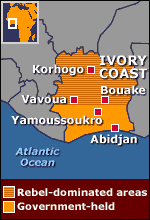
| | Saturday, 12 October, 2002, 23:07 GMT 00:07 UK Ivory Coast defence minister axed 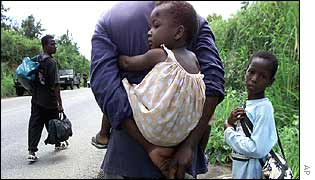 Refugees have been fleeing Bouake as the fighting lulls In Ivory Coast, President Laurent Gbagbo has dismissed the country's Defence Minister, Moise Lida Kouassi, and assumed personal responsibility for the portfolio, officials said. Kadie Gaye Bertin, a recently appointed junior minister, will now advise the president on matters of defence and Mr Kouassi will take up a position within the presidential office, state television reported.
"The president is positioning himself to wage the war as he wants to - that is, to switch from being on the defensive to going on the offensive, it's a new strategy," Mamadou Koulibaly, the president of the National Assembly, told AFP. Observers say that there has been a great deal of speculation in recent days that Mr Kouassi would be moved because of the army's failure to crush the three-week old rebellion. Ceasefire negotiations Hopes for achieving a ceasefire now come in the form of an effort from Senegal's Foreign Minister Cheikh Tidiane Gadio who has held talks with the rebels in the rebel stronghold of Bouake. The approaches were made during a lull in the fighting which flared again when ceasefire negotiations between the rebels and the government broke down last week. Mr Gadio said that the rebels had been receptive and keen to talk.
However, neither side would shed any light on which elements in the talks were new. Our correspondent in Bouake Paul Welsh says that finding common ground with the government will be difficult - they have insisted that the rebels lay down their weapons before talks can begin, effectively asking them to surrender before negotiating a peace deal. The lull in fighting has also allowed thousands of people to flee Bouake, the second biggest city in Ivory Coast. Humanitarian crisis The city's middle class joined the exodus in the first light of Saturday morning - leaving on foot, their possessions in bundles carried on their heads. More than a 150,000 are thought to have left - more than a quarter of the population. The United Nations food agency has warned of a "humanitarian crisis" in Ivory Coast if the uprising does not end soon.
The World Food Programme (WFP) has said that the situation could degenerate to the level of the Great Lakes region, where millions have died in conflicts in Rwanda, the Democratic Republic of Congo and Burundi. "All the ingredients are present for a large-scale humanitarian crisis through a massive displacement of people in the country and possible outflow of immigrant workers into neighbouring countries," the WFP said. Hundreds of people have been killed during the uprising, which began on 19 September, raising fears of instability spreading across West Africa. Security forces have been raiding shanty towns - mainly housing West African immigrants - and burning down shacks in Abidjan. Ibrahima Doumbia of the Ivorian Movement for Human Rights (MIDH) said there had been numerous executions, arrests and disappearances in government-controlled areas. | |
See also:  11 Oct 02 | Africa 10 Oct 02 | Business 08 Oct 02 | Africa Internet links: The BBC is not responsible for the content of external internet sites Top Africa stories now: Links to more Africa stories are at the foot of the page. | ||||||||||||||||||||||||||||||||||||||||||||||||||||||||||||||||||||||||||||||||||||||||||||||||||||||||||||||||||||||||||||||||||||||||||||||||||||||||||||||||||||||||||||||||||||||||||||||||||||||||
| |
|  E-mail this story to a friend E-mail this story to a friend |
| |
| Links to more Africa stories |
| | | ||
 | ||||
 | | Back to top
| ||
| ---------------------------------------------------------------------------------- To BBC Sport>> | To BBC Weather>> | To BBC World Service>> ---------------------------------------------------------------------------------- © MMIII | News Sources | Privacy |