|
 |
 | | | | | | |||||||||||||||||||||||||||||||||||||||||||||||||||||||||||||||||||||||||||||||||||||||||||||||||||||||||||||||||||||||||||||||||||||||||||||||||||||||||||||||||||||||||||||||||||||||||||||||||||||||||||||||
| | | You are in: Africa | |||||||||||||||||||||||||||||||||||||||||||||||||||||||||||||||||||||||||||||||||||||||||||||||||||||||||||||||||||||||||||||||||||||||||||||||||||||||||||||||||||||||||||||||||||||||||||||||||||||||||||||||||
|
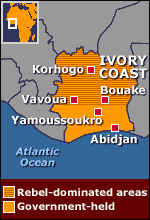
| | Thursday, 10 October, 2002, 17:36 GMT 18:36 UK Civilians flee Ivory Coast fighting 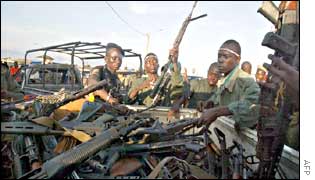 The rebels are holding on to their weapons Fighting between the Ivory Coast Government and rebel troops around the second city of Bouake has forced up to 150,000 people to flee their homes, according to the Red Cross.
There was heavy fighting this week around Bouake, the rebels' main stronghold, during two days of failed assaults by government troops. The Ivory Coast Government says it will not negotiate with the rebels - who control half of the country - until they lay down their arms. But rebels appear bolstered by their success and have vowed to launch a general offensive. The Senegalese foreign minister, Cheikh Tidiane Gadio, has arrived in Ivory Coast on a new mediation mission. He is expected to meet rebel leaders in Bouake. Hundreds of people have been killed in the uprising, which that has exacerbated ethnic tensions and raised fears of instability spreading across West Africa. Simon Pluess, a spokesman for the International Committee of the Red Cross (ICRC) in Ivory Coast, expressed concern about the fate of those who have fled homes in the Bouake region. He was speaking from Abidjan, the country's economic capital, after an ICRC team visited rebel-held territory. Click here to read about life in BouakeMr Pluess told BBC French-for-Africa radio that 150,000 residents had left either because of the fighting, or because they were no longer getting food. Economic collapse An attempt by the regional grouping, Ecowas, to broker peace collapsed at the weekend, after Ivory Coast President Laurent Gbagbo rejected a ceasefire proposal that would have frozen the front lines but allowed the rebels to keep their weapons.
Efforts to restart negotiations have intensified since the failure of the government offensive to retake Bouake. On Wednesday, French Foreign Minister Dominique de Villepin spoke to President Gbagbo by telephone to urge him to talk to the rebels. But Ivorian ambassador to the United Nations Djessan Phillipe Djangon-Bi has ruled out negotiating, saying it could destabilise the entire region. The rebels have rejected a call by President Laurent Gbagbo to disarm as a prerequisite for talks. Attacks against foreigners The rebellion has exacerbated ethnic tensions in Ivory Coast between the Muslim North and the Christian south.
There have also been attacks against African immigrants - especially from neighbouring Burkina Faso - after the government initially said that foreign powers were behind last month's attempted coup by mutinous soldiers. Since the uprising began, world cocoa prices have risen by about 40% to near 17-year highs. Ivory Coast is the richest country in West Africa and up to a third of its inhabitants are of foreign origin, after years when immigrants were officially encouraged to work in the country's cocoa and coffee plantations. However in a televised address on Tuesday, Mr Gbagbo urged Ivorians not to attack immigrants. The Burkina Faso Government says it is considering setting up "humanitarian corridors" to evacuate its nationals from Ivory Coast, should attacks against them continue. More than 1,000 French citizens and other westerners were evacuated from Bouake by French forces following the uprising. | |
See also:  10 Oct 02 | Business 09 Oct 02 | Africa 08 Oct 02 | Africa 08 Oct 02 | Africa 06 Oct 02 | Africa 06 Oct 02 | Africa Internet links: The BBC is not responsible for the content of external internet sites Top Africa stories now: Links to more Africa stories are at the foot of the page. | |||||||||||||||||||||||||||||||||||||||||||||||||||||||||||||||||||||||||||||||||||||||||||||||||||||||||||||||||||||||||||||||||||||||||||||||||||||||||||||||||||||||||||||||||||||||||||||||||||||||||||||||
| |
|  E-mail this story to a friend E-mail this story to a friend |
| |
| Links to more Africa stories |
| | | ||
 | ||||
 | | Back to top
| ||
| ---------------------------------------------------------------------------------- To BBC Sport>> | To BBC Weather>> | To BBC World Service>> ---------------------------------------------------------------------------------- © MMIII | News Sources | Privacy |