|
 |
 | | | | | | ||||||||||||||||||||||||||||||||||||||||||||||||||||||||||||||||||||||||||||||||||||||||||||||||||||||||||||||||||||||||||||||||||||||||||||||||||||||||||||||||||||||||||||||||||||||||||||||||||||||||||||||||||||||||
| | | You are in: Africa | ||||||||||||||||||||||||||||||||||||||||||||||||||||||||||||||||||||||||||||||||||||||||||||||||||||||||||||||||||||||||||||||||||||||||||||||||||||||||||||||||||||||||||||||||||||||||||||||||||||||||||||||||||||||||||
|
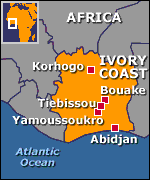
| | Monday, 7 October, 2002, 20:25 GMT 21:25 UK Battle rages for Ivory Coast city 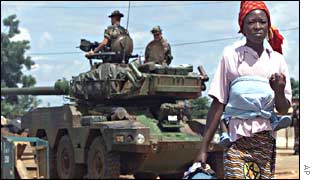 French troops operate road blocks near rebel positions Government soldiers in armoured cars entered the centre of the rebel-held Ivory Coast stronghold of Bouake on Monday but withdrew after brief fighting. The soldiers moved into the country's second city, held by rebels since 19 September, during the early afternoon but left after two or three hours. The rebel troops were reported to have then retaken their positions. Government forces began their offensive on Sunday after the failure of talks to achieve a ceasefire.
The uprising has claimed hundreds of lives and left thousands displaced. "There is firing from all sides," one woman in Bouake told AP news agency by telephone. "The house is shaking." Large numbers of residents were seen fleeing east from Bouake, but a journalist there, Emmanuel Goujon, told the BBC's Focus on Africa programme that there was now no way out as loyalist forces were attacking from several directions inside the city itself. "The real offensive has started," he said. He added that at least 10 rebels had been injured by shells and bullets. France, the former colonial power, urged the Ivorian government on Monday to sign a ceasefire accord with the rebels, who control about half the country. On Sunday President Laurent Gbagbo had refused to sign, angering West African ministers who have been in the country mediating. More weapons French Foreign Minister Dominique de Villepin told French radio that it was important Laurent Gbagbo signed the agreement. "We believe that there can be no military solution to the difficulties which Cote d'Ivoire is currently experiencing," Mr de Villepin said.
It is also providing tactical and logistical help to government forces, but its 900 troops have so far not directly taken part in the fighting. The Ivorian government seems to be determined to resolve the situation militarily. A rebel spokesman, Jean Bonfils Agnero, told the BBC French service from Bouake that two Russian helicopters with Ukrainian crews were about to leave Abidjan airport to bomb towns in the north of the country. Earlier, journalist Emmanuel Goujon also told the BBC French service that the Ivorian military has received six billion CFA francs (about $9m) worth of weaponry from Yugoslavia. This is reported to included armoured cars and artillery, as well as night sights and rifles which are for use by elite troops in Bouake. The elite troops will reportedly be bolstered by a large number of troops which have recently been recruited. 'Foot-dragging' The West African mediators who tried to arrange a ceasefire between the government and mutineers over the past three days are now returning home. The mediators said the Ivorian government wanted the rebels to disarm before agreeing a ceasefire.
Correspondents say members of the Ecowas team have shown increasing signs of frustration with the Ivorian government, whom they accuse of delaying tactics. The rebels and the mediators prepared for a signing ceremony three times in as many days - only to have it cancelled at the last moment by Ivorian officials. "They have been fooling around with us for days," an anonymous member of the Ecowas delegation told AFP. "There is not the slightest sign of good will," he added. Regional tensions The rebels have been calling for the overthrow of President Gbagbo and for fresh elections in which all political parties would be allowed to participate.
Sunday's ceremony was supposed to take place in Tiebissou, effectively the front line since rebels took control of northern areas 17 days ago. The Ecowas mediation team was composed of foreign ministers and defence chiefs from Nigeria, Ghana and Togo. The Ivorian authorities have said the rebels are mercenaries controlled by a foreign state - an allegation widely understood to mean its northern neighbour, Burkina Faso. On Sunday, Ivory Coast's state television was reported as saying that the "key to victory" was to expel the more than two million Burkina Faso nationals who live there. Several shanty towns in Abidjan housing immigrants have been torched since the uprising. | |
See also:  06 Oct 02 | Africa 06 Oct 02 | Africa 03 Oct 02 | Africa 02 Oct 02 | Africa 01 Oct 02 | Africa 07 Oct 02 | Africa Internet links: The BBC is not responsible for the content of external internet sites Top Africa stories now: Links to more Africa stories are at the foot of the page. | ||||||||||||||||||||||||||||||||||||||||||||||||||||||||||||||||||||||||||||||||||||||||||||||||||||||||||||||||||||||||||||||||||||||||||||||||||||||||||||||||||||||||||||||||||||||||||||||||||||||||||||||||||||||||
| |
|  E-mail this story to a friend E-mail this story to a friend |
| |
| Links to more Africa stories |
| | | ||
 | ||||
 | | Back to top
| ||
| ---------------------------------------------------------------------------------- To BBC Sport>> | To BBC Weather>> | To BBC World Service>> ---------------------------------------------------------------------------------- © MMIII | News Sources | Privacy |