|
 |
 | | | | | | ||||||||||||||||||||||||||||||||||||||||||||||||||||||||||||||||||||||||||||||||||||||||||||||||||||||||||||||||||||||||||||||||||||||||||||||||||||||||||||||||||||||||||||
| | | You are in: Africa | ||||||||||||||||||||||||||||||||||||||||||||||||||||||||||||||||||||||||||||||||||||||||||||||||||||||||||||||||||||||||||||||||||||||||||||||||||||||||||||||||||||||||||||||
|
| | Tuesday, 1 October, 2002, 07:52 GMT 08:52 UK Search ends under Senegal ferry 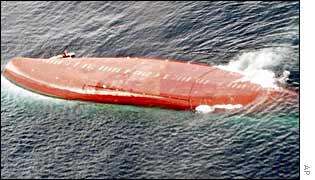 The ferry had nearly double the passengers allowed Rescue teams have abandoned the search for any more survivors inside the upturned hull of the Senegalese ferry, the Joola. The search on the surface will continue but Senegalese officials said divers had stopped looking inside the ship.
A spokesman for the prime minister said: "There is now no chance of finding survivors inside the ship and as a result the dives into the ship were halted". The news came as the results of a preliminary inquiry into the disaster were awaited. The Senegalese authorities have revealed that more than 1,000 people were on the ship that capsized on Thursday off the coast of Gambia. The prime minister's office said 185 passengers who had boarded the ferry at a second stop had not been counted originally. Only 64 survivors have been found and everyone else is feared to be dead.
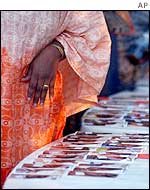
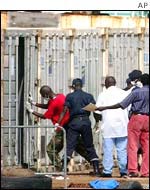
Mass burials of the victims have already started in the southern Casamance region of Senegal. The BBC's Alpha Jallow told the Network Africa programme that 75 corpses had been interred in a mass grave, "Muslims and Christians together", because they were so disfigured by the accident and the time they had been in the sea that they could not be positively identified More burials are expected on Tuesday. Anger is mounting in Senegal against the government, which has accepted responsibility for the tragedy. Identifying victims Grieving families have been gathering in the city hall of the capital, Dakar, where pictures of the remains were put on display by the Senegalese authorities. They are also trying to establish the identities of the more than 350 bodies recovered so far.
Divers involved in the rescue said that the bodies trapped in the ship are decomposing and there will be little chance that they can be identified once they are brought out. Senegalese President Abdoulaye Wade said it had been established that the ship was overloaded - and the state would compensate the victims' families. The ferry, named the Joola, was travelling from Ziguinchor, the main town of the southern Senegalese province of Casamance, to Dakar when the tragedy occurred. Mr Wade said people had been allowed on without tickets to the ferry, which had a capacity of 550 passengers. Questions have also been raised about maintenance, as the Joola had only recently resumed service after undergoing repairs. Jean-Marie Diatta, anxiously waiting for news of his relatives, told the BBC he blamed the tragedy on negligence.
He said an earlier sailing from Ziguinchor had also experienced problems, with one of the ship's motors damaged in a storm. "What we are seeing now is the result of irresponsibility," according to Mr Diatta. Most of those missing are Senegalese nationals, along with a number of foreigners from neighbouring Guinea-Bissau and Gambia - as well as French, Spanish and Swiss nationals. The government declared three days of national mourning. | |
See also:  28 Sep 02 | Africa 27 Sep 02 | Africa Internet links: The BBC is not responsible for the content of external internet sites Top Africa stories now: Links to more Africa stories are at the foot of the page. | ||||||||||||||||||||||||||||||||||||||||||||||||||||||||||||||||||||||||||||||||||||||||||||||||||||||||||||||||||||||||||||||||||||||||||||||||||||||||||||||||||||||||||||
| |
|  E-mail this story to a friend E-mail this story to a friend |
| |
| Links to more Africa stories |
| | | ||
 | ||||
 | | Back to top
| ||
| ---------------------------------------------------------------------------------- To BBC Sport>> | To BBC Weather>> | To BBC World Service>> ---------------------------------------------------------------------------------- © MMIII | News Sources | Privacy |