|
 |
 | | | | | | |||||||||||||||||||||||||||||||||||||||||||||||||||||||||||||||||||||||||||||||||||||||||||||||||||||||||||||||||||||||||||||||||||||||||||||||||||||||||||||||||||||||||||||||
| | | You are in: Africa | |||||||||||||||||||||||||||||||||||||||||||||||||||||||||||||||||||||||||||||||||||||||||||||||||||||||||||||||||||||||||||||||||||||||||||||||||||||||||||||||||||||||||||||||||
|
| | Tuesday, 24 September, 2002, 15:50 GMT 16:50 UK Ivorian media suffers in silence 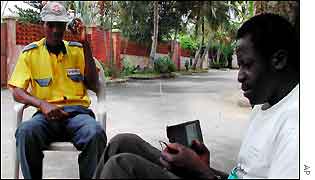 Foreign radio stations were taken off the air
As the confrontation between the government and rebel soldiers escalates in Ivory Coast, the government is becoming increasingly sensitive about press coverage by national and international media. Last night it explained new measures to censor the media, in what it described as a "state of war".
Crowds could be seen gathering around kiosks every morning, where front pages of at least a dozen colourful, opinionated if sometimes vitriolic, newspapers were pinned. Silence But as Abidjan attempts a return to normality, those stands remain strangely empty. Most people regularly tune in for news, current affairs and chat-shows to the FM stations, like Africa No 1, Radio France International, and the BBC French or African service. But on Sunday afternoon, those three stations were suddenly replaced with a blank buzz. The Ministry of Information was at a loss as to explain why. Perhaps it was a mistake, said a spokesman. State radio continued loud and strong. Finally, last night in an interview on state TV, RTI, all became clear. Jerome Diegou-Bailly, the president of the government National Audiovisual Committee, casually explained: "It's quite usual, when a country is in a state of war, one must manage the information in order not to spread death and disruption among the population," he said. Etrange times The broadcast went on to show the Cojep, a group of militant youth loyal to President Laurent Gbagbo's ruling FPI party, loudly condemning traitors and foreign assailants for the current unrest.
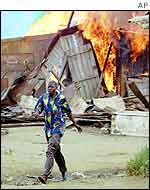
This echoed the sentiments of an article in the FPI party paper, Notre Voie, on Monday, which ran the headline, "BBC, RFI, AFP, the other opponents of Ivory Coast'. A few hours later, at a popular soap-box corner later, a speaker dismissed widespread accusations of xenophobia. "My friends!" he yelled. "Ivorians have got nothing against strangers!... It's just that Ivorians don't like strange people!" He was making a play on the French word, etranger, which also means foreigner. Arrests A rare Spanish tourist happened to be passing by, and thought he would listen in. The poor man was nearly mobbed by angry youths, accusing him of being a foreign journalist, and he had to be rescued by police. The unlucky Spaniard was getting just a small taste of the aggression directed towards the foreign press, accused of misreporting recent events, especially circumstances around the death of General Guei and the burning down of poor areas of town. In fact, two journalists including a BBC correspondent, were briefly arrested by paramilitary gendarmes on Saturday evening trying to report this. Threats And it is not only foreign journalists who are finding it increasingly difficult to operate. Four local newspapers with a reputation for being critical of the government, have failed to appear on the newsstands since last Thursday. "We've had many threats - to destroy newspaper kiosks, to burn down offices and attack journalists," said one journalist, who preferred to remain anonymous. A reporter from Le Patriote, a paper close to Alassane Ouattara's RDR party, ended up in hospital on Monday. He had gone to cover a meeting at which FPI youth were seeking to rally thousands of young men to march north to reclaim Bouake - from what they described as the RDR backed rebels. The reporter, Mamadi Keita, was so badly beaten, with wounds on his head, skull and back, that he ended up in hospital. The paper's editor, M Maite, said he had spoken to Mr Lia Bi, a representative of the information minister. But had an unsatisfactory response. "He told me that they could not ensure our security, if we published articles that embarrassed the government, because the country was at war." "Basically," he told me, "I realised I had two options. Either align ourselves with the government and state media, or stop publication." For the moment, Le Patriote, along with other papers, like Le Liberal, 24 hrs, and Tassouma, have opted for the latter. | |
See also:  22 Sep 02 | Africa 19 Sep 02 | Africa 19 Sep 02 | Africa Internet links: The BBC is not responsible for the content of external internet sites Top Africa stories now: Links to more Africa stories are at the foot of the page. | |||||||||||||||||||||||||||||||||||||||||||||||||||||||||||||||||||||||||||||||||||||||||||||||||||||||||||||||||||||||||||||||||||||||||||||||||||||||||||||||||||||||||||||||
| |
|  E-mail this story to a friend E-mail this story to a friend |
| |
| Links to more Africa stories |
| | | ||
 | ||||
 | | Back to top
| ||
| ---------------------------------------------------------------------------------- To BBC Sport>> | To BBC Weather>> | To BBC World Service>> ---------------------------------------------------------------------------------- © MMIII | News Sources | Privacy |