|
 |
 | | | | | | |||||||||||||||||||||||||||||||||||||||||||||||||||||||||||||||||||||||||||||||||||||||||||||||||||||||||||||||||||||||||||||||||||||||||||||||||||||||||||||||||||||||||||||||||||||
| | | You are in: Africa | |||||||||||||||||||||||||||||||||||||||||||||||||||||||||||||||||||||||||||||||||||||||||||||||||||||||||||||||||||||||||||||||||||||||||||||||||||||||||||||||||||||||||||||||||||||||
|
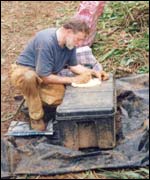
| | Wednesday, 24 July, 2002, 08:42 GMT 09:42 UK Hope in search for Saro-Wiwa's remains 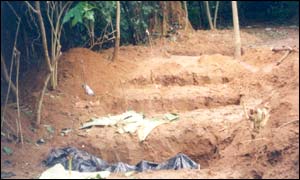 Eight graves have been dug up so far during the search
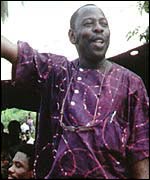
Ken Saro-Wiwa was an Ogoni leader and environmentalist.
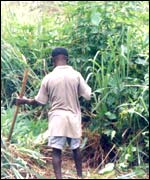
It took two forensic experts from the United States-based Physicians for Human Rights more than a week to exhume eight skeletal remains from the cemetery. A remaining grave where those who supervised the burial said one of the Ogonis was buried has still not been identified. Sacrifice It was not easy locating the unmarked graves in the bush areas of the cemetery. The men were buried there under military supervision after their execution by hanging. The then military government was anxious to avoid Saro-Wiwa's grave becoming a rallying point for protests against the regime. Gravediggers at the cemetery would not allow the American forensic experts to carry out the exhumation until a cock had been sacrificed.
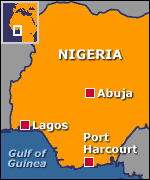
"The ritual is necessary to appease the spirits of the dead men," said gravedigger Friday Nwikue. "It is spiritually dangerous to exhume the remains of a person after burial." The exhumations were carried out with a measure of secrecy to avoid publicity which could have led to people going to the cemetery and disrupting the work. Slow process The executions are still a sensitive issue in Port Harcourt. The human remains will be sent to a laboratory in Canada where DNA analysis will be conducted to determine whether they are those of Saro-Wiwa and the others executed with him. It could take up to three months to identify the bodies.
The bodies will also be checked for signs of torture or other mistreatment. If their identities are confirmed, the remains will be returned to their families for burial. Doctor Owens Wiwa, Mr Saro-Wiwa's younger brother, says: "The return of the remains of the nine Ogonis to their families should be the beginning of the civilian government's effort to put right the evil that its military predecessors inflicted on the Ogoni people." Books buried Before his execution, Saro-Wiwa led the Ogonis in a struggle against the environmental impact of oil exploitation in his Ogoni homeland. The controversial trial and execution of Saro-Wiwa and the other eight Ogonis by the military government of General Sani Abacha led to international condemnation and sanctions against Nigeria.
With the return to civil rule three years ago, Ken Saro-Wiwa's family appealed to the Nigerian Government to hand over his remains so they could give him a decent burial. In January 2000, the government failed to fulfil its promise to allow the exhumation to take place. The family, which had prepared an elaborate burial, ended up burying a coffin containing books he wrote in his lifetime. | |
See also:  18 Jul 02 | Africa 17 Jul 02 | Africa 09 Jul 02 | Africa 19 Oct 01 | Africa 25 Jul 01 | Africa Internet links: The BBC is not responsible for the content of external internet sites Top Africa stories now: Links to more Africa stories are at the foot of the page. | |||||||||||||||||||||||||||||||||||||||||||||||||||||||||||||||||||||||||||||||||||||||||||||||||||||||||||||||||||||||||||||||||||||||||||||||||||||||||||||||||||||||||||||||||||||
| |
|  E-mail this story to a friend E-mail this story to a friend |
| |
| Links to more Africa stories |
| | | ||
 | ||||
 | | Back to top
| ||
| ---------------------------------------------------------------------------------- To BBC Sport>> | To BBC Weather>> | To BBC World Service>> ---------------------------------------------------------------------------------- © MMIII | News Sources | Privacy |