|
 |
 | | | | | | ||||||||||||||||||||||||||||||||||||||||||||||||||||||||||||||||||||||||||||||||||||||||||||||||||||||||||||||||||||||||||||||||||||||||||||||||||||||||||||||||||||||||||
| | | You are in: Africa | ||||||||||||||||||||||||||||||||||||||||||||||||||||||||||||||||||||||||||||||||||||||||||||||||||||||||||||||||||||||||||||||||||||||||||||||||||||||||||||||||||||||||||||
|
| | Tuesday, 16 July, 2002, 18:58 GMT 19:58 UK Oil deal 'off', Nigerian women say 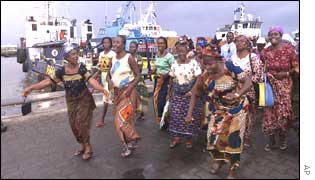 Protesters are demanding a fairer share of oil revenues Women protesters who have besieged an oil terminal in southern Nigeria for more than a week say they will continue their blockade. Earlier, it seemed as if a deal to resolve the situation could be close. However the women said negotiators for the Chevron oil company were not "sincere" and were not committing themselves to anything by way of agreement. One of the women told the BBC's Robert Efenakpo that they will remain at the terminal until the company is ready to discuss the situation.
The women say that Chevron may have agreed to employ youths from their community, but that the oil giant did not give any numbers. They say the multinational has not specified either how it is going to go about providing the amenities it has promised in the framework of the deal. U-turn Earlier on Tuesday, one of the protest leaders, Anunu Uwawah, told the Associated Press news agency: "It is settled. We stay today, but once the paper is signed, we will leave." She said the firm - Chevron Nigeria - had satisfied the women's demands by agreeing to hire more than two dozen villagers and build schools, water systems and other amenities.
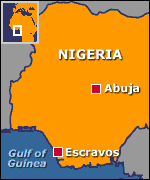
About 800 workers remain trapped in the Escravos terminal in southern Delta state, after about 400 workers were allowed to leave the site on Sunday. Some 150 women took over the terminal eight days ago, demanding employment for their families and investment in the local community. The occupation of the terminal has halted the production of an estimated 500,000 barrels of oil a day. Company pledge An executive of parent company Chevron Texaco, Dick Filgate, said he hoped the deal would be finalised by Tuesday, the news agency reported. According to Mr Filgate, the company has agreed to build a town hall in the village of Ugborodo - home to many of the protesters - and build schools and power and water systems. "We now have a different philosophy, and that is do more with communities," AP quoted Mr Filgate as saying following talks with the women. He said the deal would be reviewed in five years' time. As part of their protest, the women have also threatened to strip naked in a traditional gesture of shaming men if no satisfactory deal is reached. Many Nigerian tribes consider displays of nudity by wives, mothers and grandmothers as a damning protest and an act that shames all those it is aimed at. Nigeria is Africa's largest oil-producer but protests are common in oil-producing regions by local communities, demanding that more of the oil wealth is used for their benefit. Locals often kidnap workers and demand ransom money from oil companies. | |
See also:  16 Jul 02 | Africa 11 Jul 02 | Africa 09 Jul 02 | Africa 23 Apr 02 | Africa 03 Apr 02 | Business 17 Mar 00 | Africa Internet links: The BBC is not responsible for the content of external internet sites Top Africa stories now: Links to more Africa stories are at the foot of the page. | ||||||||||||||||||||||||||||||||||||||||||||||||||||||||||||||||||||||||||||||||||||||||||||||||||||||||||||||||||||||||||||||||||||||||||||||||||||||||||||||||||||||||||
| |
|  E-mail this story to a friend E-mail this story to a friend |
| |
| Links to more Africa stories |
| | | ||
 | ||||
 | | Back to top
| ||
| ---------------------------------------------------------------------------------- To BBC Sport>> | To BBC Weather>> | To BBC World Service>> ---------------------------------------------------------------------------------- © MMIII | News Sources | Privacy |