|
 |
 | | | | | | |||||||||||||||||||||||||||||||||||||||||||||||||||||||||||||||||||||||||||||||||||||||||||||||||||||||||||||||||||||||||||||||||||||||||||||||||||||||||||||||||||||||||||
| | | You are in: Africa | |||||||||||||||||||||||||||||||||||||||||||||||||||||||||||||||||||||||||||||||||||||||||||||||||||||||||||||||||||||||||||||||||||||||||||||||||||||||||||||||||||||||||||||
|
| | Thursday, 11 July, 2002, 20:55 GMT 21:55 UK Ethiopia's new-found plenty Tsige: "Now I can feed my children"
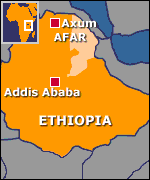
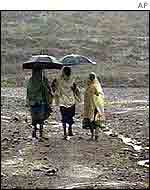
Parts of northern Ethiopia, which were badly hit by famine a generation ago, are now exporting a food surplus and are confident that they can survive a year without rain. The famine of 1984 shocked the world, inspiring pop stars to come together for the Live Aid concert on 13 July 1985.
Now a unique scheme in the Axum area is working to conserve water in the years of plenty and improve soil fertility so that in years when the rains do not come, people are better suited to face the hardship. Escape from poverty Tsige Gebre Abzgi has more cause than most to remember the 1984 famine. She watched her oldest son die of starvation.
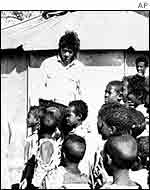
"I used to be poor," she says. "But now I can feed my children. They go to school. I have shoes and clothes, and I have improved my home." When she first began to develop the land she faced opposition from her neighbours and success has only come from the whole community coming together with support from government agencies. Organic farming There was no single magic solution. Their success has come from a combination of factors.
The guru of sustainable development in Ethiopia, Tewolde Berhan Gebre Egziabher, says that fertilising the land using compost was one of the main keys to their success. The scheme, he adds, faced significant opposition at first because it turned its back on chemical fertilisers. "It was free and so it was opposed by those who want a market. It benefited the peasant farmer and not the merchant." The scheme in the Adi Nifas village was so successful that a number of other villages followed the plan and now the nearby market in Axum is thriving where a generation ago people were starving to death. Ethiopian lesson Dr Tewolde says that the world should learn a lesson from Adi Nifas. He says that the world will face a major food crisis in the 21st century if it continues down the road of intensive farming, using heavy chemical fertilisers and pesticides.
"We have sliced up the earth into marketable products. If chemical fertilisers could fit in there would be no objection. But they don't. "Every time that agriculture is intensified a problem is created. We must go back to actually paying attention to what is inside the soil." While Ms Tsige is now feeding her family securely for the first time in her life, she also has time to make a little beer to sell to passers-by on Saturday nights. And organic farming had an unexpected bonus. Not only do the grains go further in cooking because they are bigger and better than grain grown by chemical fertiliser, but she says the food tastes better. | | See also:  10 Jul 02 | Africa 13 Jun 02 | Africa 02 Jul 02 | Africa Internet links: The BBC is not responsible for the content of external internet sites Top Africa stories now: Links to more Africa stories are at the foot of the page. | |||||||||||||||||||||||||||||||||||||||||||||||||||||||||||||||||||||||||||||||||||||||||||||||||||||||||||||||||||||||||||||||||||||||||||||||||||||||||||||||||||||||||||
| |
|  E-mail this story to a friend E-mail this story to a friend |
| |
| Links to more Africa stories |
| | | ||
 | ||||
 | | Back to top
| ||
| ---------------------------------------------------------------------------------- To BBC Sport>> | To BBC Weather>> | To BBC World Service>> ---------------------------------------------------------------------------------- © MMIII | News Sources | Privacy |