|
 |
 | | | | | | ||||||||||||||||||||||||||||||||||||||||||||||||||||||||||||||||||||||||||||||||||||||||||||||||||||||||||||||||||||||||||||||||||||||||||||||||||||||||||||||||||||||||||||
| | | You are in: Africa | ||||||||||||||||||||||||||||||||||||||||||||||||||||||||||||||||||||||||||||||||||||||||||||||||||||||||||||||||||||||||||||||||||||||||||||||||||||||||||||||||||||||||||||||
|
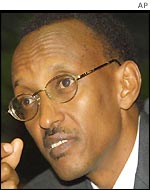
| | Wednesday, 10 July, 2002, 23:06 GMT 00:06 UK Kagame rejects DR Congo pull-out Rwandan troops entered DR Congo in 1998 Rwandan President Paul Kagame has rejected calls to withdraw Rwandan troops from the neighbouring Democratic Republic of Congo (DRC). Mr Kagame said Rwandan forces would remain in the DRC until Rwanda's security concerns were met.
His comments came as the International Court of Justice (ICJ) at The Hague said it could not order an immediate halt to Rwanda's military activities in the DRC. However, the ruling is provisional and does not affect the overall case brought by the DR Congo, which accuses Rwanda of genocide.
In its lawsuit, the Congolese Government says that Rwanda is guilty of "massive, serious and flagrant violations of human rights". The DRC has demanded reparations for the human and resource losses caused to it by Rwanda's actions. Buffer zone There are still an estimated 20,000 Rwandan troops in DR Congo and in the past week there have been reports from the UN that they are being deployed in areas where fighting has taken place between government forces and rebels.
In an attempt to reduce tensions between the two countries, the two presidents met at the African Union summit to discuss the creation of a neutral zone along their border and the possible deployment of UN troops there. Mr Kagame said Rwanda would not pull its forces out of the DRC until Rwandan Hutu militias which Rwanda says are sheltering in the DRC are disarmed and returned to Rwanda to face charges of genocide. Rwanda says the militias were responsible for killing 800,000 Tutsis and moderate Hutus in Rwanda in 1994. "The concerns of Rwanda remain and have not changed," President Kagame said after talks on Wednesday Crucifixion A spokeswoman for the international court told BBC News Online that following Wednesday's interim ruling, the ICJ will now assess both parties' written submissions.
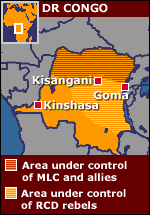
It will then proceed to rule on whether it has jurisdiction to try the case. No date has been set for this ruling. The case against Rwanda has been brought under the International Convention on the Prevention and Punishment of the Crime of Genocide and other conventions relating to the rights of women, racial discrimination and torture. The DR Congo says in its suit that Rwandan troops invaded DR Congo in August 1998 and occupied parts of eastern Congo, including the town of Goma. Its charges are serious: "In killing, massacring, raping, throat-slitting and crucifying, Rwanda has rendered itself guilty of the genocide of more than 3.5 million Congolese people," the lawsuit says. The suit details cases of assassination, kidnapping, systematic looting, inhuman and degrading treatment and destruction of Congolese flora and fauna. The Rwandan submission to the court says that the DR Congo has failed to produce evidence that "links Rwanda to any of the activities that are alleged to have taken place". In defence of the presence of its troops in DR Congo, Rwanda has argued that it is a matter of self-defence against Hutu rebels based there. | |
See also:  13 Jun 02 | Africa 04 Jul 02 | Africa 26 Apr 02 | Africa 25 May 02 | Africa 01 Jun 02 | Africa 24 May 02 | Africa Internet links: The BBC is not responsible for the content of external internet sites Top Africa stories now: Links to more Africa stories are at the foot of the page. | ||||||||||||||||||||||||||||||||||||||||||||||||||||||||||||||||||||||||||||||||||||||||||||||||||||||||||||||||||||||||||||||||||||||||||||||||||||||||||||||||||||||||||||
| |
|  E-mail this story to a friend E-mail this story to a friend |
| |
| Links to more Africa stories |
| | | ||
 | ||||
 | | Back to top
| ||
| ---------------------------------------------------------------------------------- To BBC Sport>> | To BBC Weather>> | To BBC World Service>> ---------------------------------------------------------------------------------- © MMIII | News Sources | Privacy |