|
 |
 | | | | | | |||||||||||||||||||||||||||||||||||||||||||||||||||||||||||||||||||||||||||||||||||||||||||||||||||||||||||||||||||||||||||||||||||||||||||||||||||||||||||||||||||||||||||||||||||||||||||||||||||||||||||||||||||
| | | You are in: Africa | |||||||||||||||||||||||||||||||||||||||||||||||||||||||||||||||||||||||||||||||||||||||||||||||||||||||||||||||||||||||||||||||||||||||||||||||||||||||||||||||||||||||||||||||||||||||||||||||||||||||||||||||||||||
|
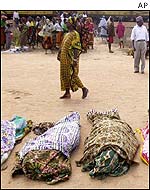
| | Tuesday, 25 June, 2002, 20:18 GMT 21:18 UK Tanzania's train crash horror Many people were trapped inside the wreckage
Rescue workers crowded round watching the carriage jerk and lift away from the remains of another carriage, to the sound of screeching metal and breaking glass.
A grey-haired man was sitting upright, squashed awkwardly between the floor of one carriage and the side of another. He was dead and surrounded by personal belongings - a suitcase, broken bottles, envelopes, a plastic bag, squashed oranges and a child's handwritten exercise book. Nearby, a young man who said his name was Felix was hunting through another carriage. "I'm looking for my friend," he explained quietly.
Felix was limping from a wound to his shin. Like the others on board the train's 22 carriages, he had waited for 30 terrifying minutes as the runaway train gathered speed, racing down the steady incline until finally it crashed into a freight train. Body parts All around us crowds of green-uniformed soldiers and rescue workers - some wearing rubber gloves or even plastic bags for protection - sifted through the debris, a grim job.
Men walked past with stretchers, some covered, others showing charred flesh. "We drove through the night to get here," said Dr Angela Limu, at the closest hospital in the small town of Mpwapwa. She and a group of colleagues had come from Dar-es-Salaam to help out. "We brought all the equipment we could," she said. "But we are running out here. We need bandages, antibiotics, pins for setting bones." Behind her, in one of the hospital's five crowded wards, men lay stretched out shoulder to shoulder on the floor. "We have at least 400 patients here," Dr Limu said. "Children, women. Broken bones, serious head injuries. Some of them need evacuating quickly to a better hospital." Passengers panic Norbert Shee was sitting upright on one of the ward's few beds. A big stained bandage was fixed across the top of his head. Norbert is a civil servant working for the National Social Security Fund. He had taken the train to start a new posting in Tabora, north-western Tanzania. "I cut my head on something," he said, sounding slightly dazed. "At first we didn't realise there was anything wrong when the train started going backwards. Then it raced through a station," he went on, explaining that they had all begun to panic. "None of us tried to jump off," he said. "it was going too fast - when it stopped I saw my colleague. He was dying." | |
See also:  25 Jun 02 | Africa 25 Jun 02 | Africa 24 Jun 02 | Africa 08 Jan 02 | Business 07 Mar 02 | Country profiles Internet links: The BBC is not responsible for the content of external internet sites Top Africa stories now: Links to more Africa stories are at the foot of the page. | |||||||||||||||||||||||||||||||||||||||||||||||||||||||||||||||||||||||||||||||||||||||||||||||||||||||||||||||||||||||||||||||||||||||||||||||||||||||||||||||||||||||||||||||||||||||||||||||||||||||||||||||||||
| |
|  E-mail this story to a friend E-mail this story to a friend |
| |
| Links to more Africa stories |
| | | ||
 | ||||
 | | Back to top
| ||
| ---------------------------------------------------------------------------------- To BBC Sport>> | To BBC Weather>> | To BBC World Service>> ---------------------------------------------------------------------------------- © MMIII | News Sources | Privacy |