|
 |
 | | | | | | |||||||||||||||||||||||||||||||||||||||||||||||||||||||||||||||||||||||||||||||||||||||||||||||||||||||||||||||||||||||||||||||||||||||||||||||||||||||||||||||||||||||||||||||||||||||||||||||||
| | | You are in: Africa | |||||||||||||||||||||||||||||||||||||||||||||||||||||||||||||||||||||||||||||||||||||||||||||||||||||||||||||||||||||||||||||||||||||||||||||||||||||||||||||||||||||||||||||||||||||||||||||||||||
|
| | Sunday, 26 May, 2002, 13:23 GMT 14:23 UK Makeshift brakes caused train crash The packed passenger section came careering down a hill Railway officials in Mozambique are blaming an extraordinary error of judgement by one of their drivers for causing the worst rail disaster in the country's history. The driver apparently used four large stones to stop passenger carriages from rolling downhill after his train lost power, but the makeshift brake gave way sending nearly 200 people to their deaths.
President Joachim Chissano has declared three days of national mourning for the people who died in the crash. Hundreds more people were injured in the accident, and President Chissano urged people to donate blood to help treat them. Buried alive Antonio Libombo of the Mozambican Railway Company said the train had experienced mechanical difficulties as it tried to climb a hill on a mountainous stretch of the line. The driver therefore disconnected the passenger section of the train, which was already half way up the hill, from the cargo section, which he took back to the nearest station.
However, the official said, the stones gave way and the passenger train careered down the tracks into the freight train, whose cargo was mainly cement. Reports said dozens of passengers were buried alive by choking cement dust. "An investigation is still under way," Transport Minister Tomas Salomao said. "But at first glance, the crash was caused by a human error." Harrowing scenes Staff from the transport ministry, fire department and ports and railway ministry worked overnight to clear the track and retrieve the last bodies. Officials said two passenger carriages were completely destroyed.
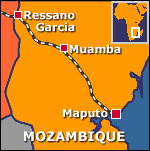
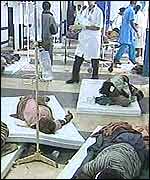
"Everything is destroyed, there are bodies that have been cut in half and we don't know how to match them up, there are severed limbs," one police officer said. Ambulances and private cars ferried the injured to hospital in Maputo. At the main hospital in the capital, scores of people lay on thin foam mattresses on the floor. President Chissano - who cut short a visit to his home village on hearing of the accident - visited victims in the hospital wards as well as going to the mortuary. Civil war The train had come from the western town of Ressano Garcia, on the border with South Africa, and was bound for Maputo with mostly women traders on board. Rail transport is very important in Mozambique, a country which went through a devastating 17-year civil war. The conflict ended nearly a decade ago, but not before it obliterated much of Mozambique's transport networks and infrastructure. Intensive use of land mines in the conflict has also made many areas and routes hazardous. But Mozambique has experienced significant economic development since the civil war ended. It is a transit route for many products from South Africa to other landlocked countries in the interior like Malawi, making transport a critical link. | |
See also:  17 Jan 02 | Business 26 May 02 | Africa 08 Mar 00 | Africa 20 May 02 | Country profiles Internet links: The BBC is not responsible for the content of external internet sites Top Africa stories now: Links to more Africa stories are at the foot of the page. | |||||||||||||||||||||||||||||||||||||||||||||||||||||||||||||||||||||||||||||||||||||||||||||||||||||||||||||||||||||||||||||||||||||||||||||||||||||||||||||||||||||||||||||||||||||||||||||||||
| |
| Links to more Africa stories |
| | | ||
 | ||||
 | | Back to top
| ||
| ---------------------------------------------------------------------------------- To BBC Sport>> | To BBC Weather>> | To BBC World Service>> ---------------------------------------------------------------------------------- © MMIII | News Sources | Privacy |