
|
 |
 | | | | | |||||||||||||||||||||||||||||||||||||||||||
| | You are in: World: Africa | |||||||||||||||||||||||||||||||||||||||||||||
 | | Thursday, 14 March, 2002, 20:28 GMT Mugabe focuses on land 'revolution' 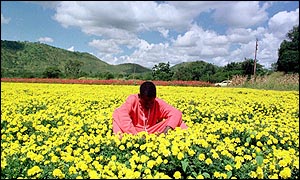 Mugabe wants to seize all white-owned farms
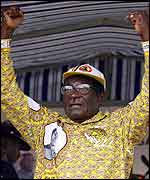
"We went to the people to seek their mandate to complete the unfinished business of the liberation war," he said.
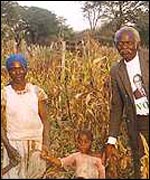
They were mostly poor black farmers living in Zimbabwe's rural areas. Many will now be celebrating, in the hope that Mr Mugabe will finally deliver on his promises to give them the prime agricultural land currently owned by the country's white minority. Opposition supporters living in towns and cities say they want jobs, not a tiny plot of land and the harsh life of a subsistence farmer. But for those already struggling to grow enough maize on one acre of sandy earth to support a family of 10 or more, the prospect of having a reasonable-sized piece of land is extremely attractive. Reconciliation ended In the past two years, most of Zimbabwe's 4,000 white-owned farms have been listed for compulsory acquisition by the government. The procedures for legally taking ownership of these properties have been greatly simplified and, with another six years in power, Mr Mugabe will have no excuses if he does not finish his "revolution".
But despite all of the president's fiery rhetoric about immediately seizing all of Zimbabwe's white-owned land and withdrawing the hand of reconciliation he offered at independence, eviction orders served on hundreds of white farmers last year have not been enforced. The attention of the state was presumably focused on Mr Mugabe's campaign for re-election. Colin Cloete, president of the white-dominated Commercial Farmers' Union told me that most of his members were still going through the legal and administrative process of appealing against the government's plans to seize their land. In some cases, magistrates are instructing land-owners and government lawyers to come to an amicable agreement - for example if the farmer offers an alternative piece of land in exchange for the one on the official list. 'Waiting' But Mr Mugabe will now feel invigorated by his renewed mandate and he will no longer have the distractions of campaigning. Indeed, he has said that prising white hands off the levers of Zimbabwe's economic power was the main reason why, at 78, he fought so hard to remain at the helm of a country he has already ruled for 22 years.
And he has hinted that he might step down, once he has achieved that goal. Mr Cloete was not willing to give much reaction to the official results. "We're waiting to see what he says." But privately, white farmers will be in despair - matching the joy of those looking forward to being given new plots of land. Political tool Mr Mugabe says that raising the living standards of millions of the country's poorest people will kick-start Zimbabwe's stricken economy. Economists, white farmers and the opposition Movement for Democratic Change predict economic disaster if the president takes highly mechanised, foreign-exchange earning farms, divides them up and redistributes them to subsistence farmers. They say that without the money to buy seeds, fertiliser and other in-puts, poor black farmers will remain as destitute as ever.
And the government, still cut off by major aid donors, is not in a position to distribute its largesse too widely. Critics accuse Mr Mugabe of doing little to tackle Zimbabwe's unequal pattern of land ownership until the MDC emerged to mount a credible political challenge to his rule. He, in turn, blames Britain for not meeting the promises of funding it made at Zimbabwe's independence in 1980 - and white farmers for resisting his attempts to redistribute land. He even says the MDC was created precisely to thwart his programme of land reform. If there is one thing that both sides of Zimbabwe's deep political divide can agree on, it is that the other has been exploiting the land question to further its electoral and economic interests. Robert Mugabe now has the extra six years in power he was looking for. His real commitment to redistributing land will soon become apparent - as will the effects on Zimbabwe's economy. | |
See also:  Internet links: The BBC is not responsible for the content of external internet sites Top Africa stories now:  Links to more Africa stories are at the foot of the page. | |||||||||||||||||||||||||||||||||||||||||||
|
Links to more Africa stories |
 | | ^^ Back to top News Front Page | World | UK | UK Politics | Business | Sci/Tech | Health | Education | Entertainment | Talking Point | In Depth | AudioVideo ---------------------------------------------------------------------------------- To BBC Sport>> | To BBC Weather>> ---------------------------------------------------------------------------------- © MMIII|News Sources|Privacy  |





 E-mail this story to a friend