|

Wale Adeyemi | | Let's talk fashion for a minute.
It's hard to look at the trends in fashion in the UK over the last 40 years without acknowledging the contribution made by black people.
|
|
| It's easy to highlight the current black fashion icons, Oswald Boateng, Wale Adeyemi and indeed young fashion guru Romero Bryant. But immigration in the 50s and 60s added new flair to a British fashion scene which was for the most part, well, decidedly British! |
|
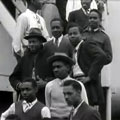
Fifties style | | For many black people arriving in the UK in the post-war period, the first thing that confronted them was how to adapt their style to accommodate the climatic challenges of their new home. |
|
| Traditional African and Caribbean culture, in terms of fashion, was influenced by the weather of the regions that immigrants were from. Therefore style was functional, with short sleeves and light material the order of the day. As many of the new arrivals were from countries that were under British rule, there was already an element of European style. |
|

50s fedora | | On arrival in the UK, the immigrants' existing style was combined with such British essentials as raincoats and hats, this in turn marked the emergence of a unique black British style. |
|
| This new style developed quickly because in most black cultures outside of the UK and America, there was a tendency for women and men to have their clothes made locally, by tailors and seamstresses. |
|
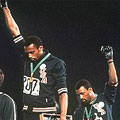
Black Power salute | | This was the cheaper option and also paved the way for the black designers of today. Black fashion has always been affected by social and religious issues of the day. The 70s, with its Black Power movement spawned the first socio/political phase of black style. |
|
| The 50s and 60s often saw people adapting European fashion to suit their present needs, but the 70s ushered in the total rejection of European ideals of beauty and fashion. |
|
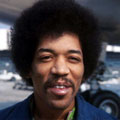
Jimi Hendrix sports an afro | | The afro hairstyle was everywhere and was perhaps the greatest representation of Black Power from a fashion perspective. The Afro was natural and all it required was the dedication to grooming. It was Black without apology and was more than a style, it was a statement. |
|
| Rastafarianism also contributed to black British style with growing number of youths from African and Caribbean backgrounds embracing the ideal of 'back to Africa' and rejecting European religious systems. |
|
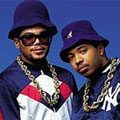
Run DMC | | Black British fashion continued its evolution in the late 70s and early 80s and joined forces with what was a wider revolution taking place in the black diaspora. Hip hop was emerging in NY and with the music came a whole new sense of style. |
|
| The early stars of the genre were in your face, fly and flashy and actually quite weird in the fashion outlook! |
|
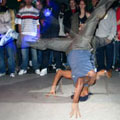
Breakdancing | | More important than how they were wearing it, was what it represented, their style quite literally said, "I am the sh*t!". Breakdancers needed loose-fitting garms to ensure that they could manoeuvre without restriction and hence the baggy style was born. |
|
| With the hip hop culture came the look and the swagger. As well the basic items, it was all about the accessories and the fat laces were as important as the sneakers! |
|
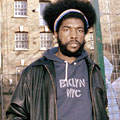
?uestlove | | Black fashion had come to a place where it was all about how you took existing fashion trends and made them your own. Times may have been hard, but you would never have guessed it, whether were you in a club in New York, or a house party in New Cross. |
|
| Fast forward to the present and you have a uniquely British black style, so much so that a recent exhibition at the Victoria & Albert Museum in London dedicated itself completely to representing what we are today and how we got here. If you think that black style in the UK is the same as it is in America, think again! Black British style has advanced to a place where it is accepted in the mainstream. |
|

David Beckham | | Wale Adeyemi, made Beckham cool, Romero Bryant dresses Tyra Banks, Christina Millian and many others. Oswald Boateng brings colour to high society. British style is now the choice of UK youth regardless of background. |
|
| So whether you are rocking a hoodie and sneakers or are all slicked out for a Saturday night, chances are that what you are wearing has been influenced by the Black British experience over the last 50 years. |
|

Ghetto fabulous! | | It's a heavy legacy to bear, just make sure that when you rock it, you rock it right! |
|
Weblinks:
V&A Black British Style |
|