|
 |
 | | | | | | ||||||||||||||||||||||||||||||||||||||||||||||||||||||||||||||||||||||||||||||||||||||||||||||||||||||||||||||||||||||||||||||||||||||||||||||||||||||||||||||||||||||||||
| | | You are in: South Asia | ||||||||||||||||||||||||||||||||||||||||||||||||||||||||||||||||||||||||||||||||||||||||||||||||||||||||||||||||||||||||||||||||||||||||||||||||||||||||||||||||||||||||||||
|
| | Monday, 2 December, 2002, 16:15 GMT Fossil hints at India's mythical river 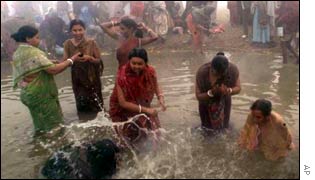 Many Hindus flock to the holy site of the Saraswati
Senior geologist BS Paliwal said the elephant fossil was discovered in a village in Nagaur district, about 300 kilometres from the state capital of Jaipur, during gypsum mining. Professor Paliwal, who is the head of the geology department at the Jai Narain Vyas university, termed the find as a "mammoth discovery for the scientific fraternity". Hidden aspects He said it might reveal many more secrets of the environmental conditions of that period.
The remains were found embedded in a gypsum layer little more than two metres from the surface. Professor Paliwal said it belonged to an elephant or its ancestor known as Stegolophodon. The fossil is a 61-centimetre-long part of the femur bone, with well-preserved condyles, a number of rib fragments, a vertebral bone, probably a lumber with a small spine and a large body and a metatarsus suggesting a size big enough for more than two toes, he said. Geography Professor Paliwal said the size of the toes indicated that the elephant was about 3.5 metres in height.
"It proves again that there were once rivers like Saraswati and civilisations were flourishing at their banks," Professor Paliwal said. He added it was possible that there were sudden climatic changes which altered the geography of the region, turning it into a vast desert. Climatic changes Abrupt climatic changes led to the blocking of river systems and the formation of saline lakes, he said. Professor Paliwal said the centuries-long drought resulted in migration or large-scale deaths of animals. He said the elephant fossil proves that there were other animals too in the region as it was not possible for a single animal species to have existed in such circumstances and climate. Geologists had a few years ago found fossils of fish in Jaisalmer, a district further west from the site of the present find. These fossils were dated to be nearly 180 million years old. Geologists said the find was evidence that large water bodies once existed in the region. | | See also:  29 Jun 02 | South Asia 12 Feb 01 | South Asia 02 May 02 | Country profiles Internet links: The BBC is not responsible for the content of external internet sites Top South Asia stories now: Links to more South Asia stories are at the foot of the page. | ||||||||||||||||||||||||||||||||||||||||||||||||||||||||||||||||||||||||||||||||||||||||||||||||||||||||||||||||||||||||||||||||||||||||||||||||||||||||||||||||||||||||||
| |
|  E-mail this story to a friend E-mail this story to a friend |
| |
| Links to more South Asia stories |
| | | ||
 | ||||
 | | Back to top
| ||
| ---------------------------------------------------------------------------------- To BBC Sport>> | To BBC Weather>> | To BBC World Service>> ---------------------------------------------------------------------------------- © MMIII | News Sources | Privacy |