
|
 |
 | | | | | | |||||||||||||||||||||||||||||||||||||||||||||||||||||||||||||||||||||||||||||||||||||||||||||||||
| | | You are in: UK | |||||||||||||||||||||||||||||||||||||||||||||||||||||||||||||||||||||||||||||||||||||||||||||||||||
|
| | Wednesday, 12 February, 2003, 12:34 GMT Spectre of Sam attacks  The US Stinger is a feared weapon
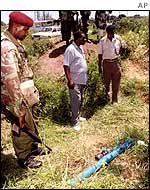
The deployments of troops at Heathrow Airport has once again highlighted the danger to airliners from shoulder-fired surface-to-air missiles in the hands of terrorists. Although there has been no confirmation of the specific threat to UK airports, speculation is rampant that the current state of alert has been sparked by fear of a missile attack. The possibility of a commercial jet with hundreds of passengers on board being downed has preyed on the mind of airline bosses since the attacks in Mombasa, Kenya, in November last year.
Jim O'Halloran, editor of Jane's Land-based Air Defence, said it was possible the attack had failed because the missiles used were more than 30 years old and had been damaged by constant transportation. But he said the spectre of an effort to shoot down an airliner by terrorists with a more modern or better maintained portable system was very real. "It's not difficult at all. I'm just amazed they haven't managed to achieve it. "I know what terrorist weapons are held, [but] they have never yet fired anything modern such as a Stinger or Russian Igla third generation system. "Non-military aircraft have been shot down by Sam systems in Africa." In 1978 and 1979, Air Rhodesia aircraft were shot down by Sams fired by guerillas of Joshua Nkomo's Zimbabwe Peoples Revolution Army (Zipra). Mr O'Halloran added: "Al-Qaeda do have Stingers. They have sufficient numbers still available to make them a huge threat." Infrared counter-measures The Stingers were given by the US to guerrillas fighting the Soviet soldiers occupying Afghanistan in the 1980s. Infrared counter-measures systems that protect aircraft against Sams are said to be in use on Israeli aircraft. They can work by preventing a missile from locking on, or generating a decoy infrared source to divert the missile.
"It is not easy. You have a battery on the front of the missile and when you turn the key on the battery, it causes two chemicals to mix and gives you a DC voltage which supplies the power to the missile. "It only lasts for 45 seconds, after which you must take out the battery and start again. "So you have got 30-35 seconds to arm the missile, lock onto the target and launch. "They have a very short range, on average 3.5km, although some of the more modern ones will go 4km. "The tricky part is making sure you are within the minimum range. If you are too close the thing won't arm and the plane will fly past." 'Perimeter security' Mr O'Halloran said airliners would be more vulnerable when landing than taking off. Air security expert Chris Yates, aviation security writer for Jane's Transport, said it was unlikely airlines would deem it cost effective to equip all the planes in their fleets with expensive counter-measure systems. "The $64,000 question after Mombasa was what do you do about perimeter security.
"You would instead be looking at enhanced patrolling by police and/or security personnel from the airport." Heathrow with its 13 miles of perimeter fencing, residential surrounds and numbers of flights, presents a security headache. Mr Yates added: "It is a hell of a big airport. It takes a lot of personnel to patrol that perimeter. "On top of that you have the patrolling beyond the perimeter. "You could park alongside a main road or in a cul-de-sac in one of the housing estates and just open the back door of the transit. "It is like looking for a needle in a haystack." But Mr Yates said it was perhaps more likely that air industry figures would be concerned about general security lapses at Heathrow, shown up by a number of robberies. "On the scale of probabilities, I would rank the potential for a bomb on a plane much higher than a missile attack." | |  
See also: 12 Feb 03 | UK 29 Nov 02 | Africa 17 Feb 03 | UK 11 Feb 03 | UK 11 Feb 03 | UK Internet links: The BBC is not responsible for the content of external internet sites Top UK stories now: Links to more UK stories are at the foot of the page. | |||||||||||||||||||||||||||||||||||||||||||||||||||||||||||||||||||||||||||||||||||||||||||||||||
 | |
|  E-mail this story to a friend E-mail this story to a friend |
| |
| Links to more UK stories |
| | | ||
 | ||||
 | | Back to top
| ||
| ---------------------------------------------------------------------------------- To BBC Sport>> | To BBC Weather>> | To BBC World Service>> ---------------------------------------------------------------------------------- © MMIII | News Sources | Privacy |






 Al-Qaeda do have Stingers - they have sufficient numbers still available to make them a huge threat

 IN DEPTH
 Terror alert