|
 |
 | | | | | | ||||||||||||||||||||||||||||||||||||||||||||||||||||||||||||||||||||||||||||||||||||||||||||||||
| | | You are in: UK | ||||||||||||||||||||||||||||||||||||||||||||||||||||||||||||||||||||||||||||||||||||||||||||||||||
|
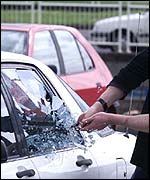
| | Thursday, 13 June, 2002, 15:29 GMT 16:29 UK Crime statistics reveal little A total of 560 people were taken into custody
A crime every five seconds, an arrest every 15 seconds. Interesting, perhaps; illuminating, not really. The statistics provided by the police, probation, prison and court services for 1 May are billed as a "snapshot" of the criminal justice system in England and Wales. The trouble with snapshots is that they are misleading when you cannot see the overall picture.
Because the snapshot is the first of its kind, there is nothing to compare it to. So it is impossible to say, for example, if the figure for the number of crimes recorded by police that day - 16,507 - is more or less than it was in previous years. The number of arrests, 5,447, means little unless you know how many of them resulted in charges, cautions, convictions and acquittals. And since the data is only concerned with events on one particular day, that sort of information is not available. 'No meaning' There are also statistics for the number of prisoners transported between police stations and courts; prisons and courts; courts and prisons; and courts and police stations. The blurb says the figures reflect "the logistics of moving vast numbers around the system on a daily basis". No they do not - we would need more information to come to that conclusion.
Similarly, the figure for the number of cases dealt with by the Probation Service that day - 200,000 - sounds big. But unless you know how many probation staff were employed to deal with the cases, and what each case entailed - a tick on a form, or intensive supervision - it is another statistic without much meaning. When the figures are put in context, then they make more sense. Victim Support said they had received 3,000 referrals on 1 May. Transparency Considering that their service is staffed mainly by volunteers, then it can be appreciated just how huge their task is. They are using the study to boost their claim for more money from the Home Office. A reason given for conducting the study was in the interests of transparency.
But the data is already out there. Every year, the Home Office publishes a set of statistics combining crime figures, arrests and sentences, while the prison service releases a detailed breakdown of numbers through jails and young offender institutions. The figures tend to be yearly totals, so if you want to work out the statistics for one day, simply divide by 365. But overall, the figures tell us only about the volume of work that the criminal justice system gets through. Ill-equipped Perhaps we should be impressed that within six weeks they have managed to collate the information in an understandable form. The Crown Prosecution Service, however, was unable even to do that. They provided figures for their average daily caseload, rather than statistics for 1 May, because their counting mechanisms weren't equipped to do so. No doubt the figures are roughly the same, reinforcing the point that although the results of this exercise were eye-catching, they told us nothing new. | | See also:  13 Jun 02 | UK 25 Oct 01 | UK 19 Jul 01 | UK 10 Jun 02 | UK 10 May 02 | UK Politics Internet links: The BBC is not responsible for the content of external internet sites Top UK stories now: Links to more UK stories are at the foot of the page. | ||||||||||||||||||||||||||||||||||||||||||||||||||||||||||||||||||||||||||||||||||||||||||||||||
| |
|  E-mail this story to a friend E-mail this story to a friend |
| |
| Links to more UK stories |
| | | ||
 | ||||
 | | Back to top
| ||
| ---------------------------------------------------------------------------------- To BBC Sport>> | To BBC Weather>> | To BBC World Service>> ---------------------------------------------------------------------------------- © MMIII | News Sources | Privacy |