
|
 |
 | | | | | | ||||||||||||||||||||||||||||||||||||||||||||||||||||||||||||||||||||||||||||||||||||||||||||||||||||||||||||||||||||||||||||||||||||||||||||||||||||||||||||||||||||||||||||||||||||||||
| | | You are in: Science/Nature | ||||||||||||||||||||||||||||||||||||||||||||||||||||||||||||||||||||||||||||||||||||||||||||||||||||||||||||||||||||||||||||||||||||||||||||||||||||||||||||||||||||||||||||||||||||||||||
|
| | Wednesday, 13 November, 2002, 10:29 GMT African ivory sales get go-ahead 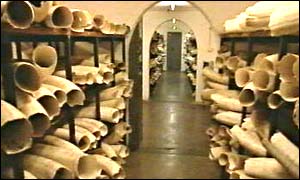 The ivory stockpiles should raise millions The United Nations has eased the worldwide ban on ivory sales by agreeing to allow three southern African nations to sell stockpiled elephant tusks. Delegates at the UN Convention on International Trade in Endangered Species (Cites) in Chile granted permission to South Africa, Botswana and Namibia to sell 60 tonnes of ivory in 2004.
But some conservation groups have reacted angrily to the news, saying the decision could "spell doom" for elephants. The African elephant population has fallen from 1.3 million in 1980 to between 300,000 and 450,000 today. There has been an international ban on African ivory sales since 1989. Narrow victory The International Fund for Animal Welfare (Ifaw) elephant campaigner Denise Boyd said: "This move could re-open the floodgates to poaching on a scale not seen in the past decade." But the convention secretary-general, Willem Wijnstekers, said the move did not imply a relaunch of the ivory trade, nor authorisation to hunt.
The BBC's Peter Greste in Santiago says the debate was bitterly divided, and the three countries had to make heavy concessions to narrowly win the two-thirds majority they needed. Our correspondent says the delay of sales until monitoring can be assured is a significant backdown from their original proposals to sell both the stockpile and annual quotas. But the three African states successfully argued it would be criminal to waste such a valuable resource that is laying idle and could be spent on both conservation and human development. Divided opinion Delegates rejected two similar applications by Zambia and Zimbabwe, arguing that they had not yet demonstrated that they could properly monitor and protect their elephant herds. The stockpiled ivory is estimated to be worth about $5m but environmentalists argue that this will be insufficient to cover the costs of protecting vulnerable elephant populations. South Africa's Environmental Minister Vallie Moosa called the vote an "enormous victory for South Africa's sustainable use policies in the international arena". And Eugene Lapointe, a former secretary-general of Cites and now president of the International Wildlife Management Consortium, said: "African conservation is dependent on the money it can obtain from ivory sales. But the head of Eritrea's delegation, a country where only 28 elephants remain, was of the opposite opinion. "One thing I am quite sure of is that we have sent a message around the world that the African elephant is less safe than it was a day ago," Hagos Yohannes said. The vote must be approved at the final meeting of the conference in the Chilean capital on Friday. | |
See also:  12 Nov 02 | Africa 11 Oct 02 | Africa 04 Oct 02 | Asia-Pacific 10 Nov 02 | Americas Internet links: The BBC is not responsible for the content of external internet sites Top Science/Nature stories now: Links to more Science/Nature stories are at the foot of the page. | ||||||||||||||||||||||||||||||||||||||||||||||||||||||||||||||||||||||||||||||||||||||||||||||||||||||||||||||||||||||||||||||||||||||||||||||||||||||||||||||||||||||||||||||||||||||||
| |
|  E-mail this story to a friend E-mail this story to a friend |
| |
| Links to more Science/Nature stories |
| | | ||
 | ||||
 | | Back to top
| ||
| ---------------------------------------------------------------------------------- To BBC Sport>> | To BBC Weather>> | To BBC World Service>> ---------------------------------------------------------------------------------- © MMIII | News Sources | Privacy |








 TALKING POINT
 Ivory trading