
|
 |
 | | | | | |||||||||||||||||||||||||||||||||||||||||||||||||
| | You are in: Sci/Tech | |||||||||||||||||||||||||||||||||||||||||||||||||||
 | | Monday, 18 March, 2002, 09:10 GMT Discord over digital music 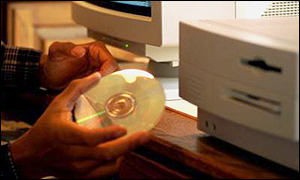 Digital piracy blamed for fall in CD sales
A whole generation is growing up with digital technology that has provided the means to get free access to music at any time. "Digital technology offers us both opportunities and threats," Fergal Gara of EMI Records told the BBC programme Go Digital. "Unless we get control of digital privacy, we will be in deep trouble. But I'm not convinced that legislation alone is the answer. What we really need to do is provide alternatives to consumers." Easy to use Digital technology, which makes it easy to produce a high quality copy of a CD or distribute songs over the internet, has been blamed for a global slump in music sales.
The International Federation of the Phonographic Industry, which represents the global music industry, estimates that piracy cost the industry more than $4bn in 2001. Part of this is due to the trade in digital audio files, MP3s, over the internet. Experts estimate around three billion music files are swapped every month. It is a reflection of how digital technology has changed how we consume music. "The sense of music needing to be tied to a physical artefact, whether that be a CD or a cassette, is coming to an end," explains Simon Hopkins, head of BBC Music Online. He believes that people who collect CDs will become as rare as people who collect 78s or are vinyl junkies now. "The minute music went virtual in the 1990s, when it was available as ones and zeros over the internet, music was no longer a fixed commodity, no longer something the artist handed over to the audience," he says. Adapt or die This is forcing the music industry to rethink entrenched ways of doing business.
"Everyone panicked after Napster," says Dr Nina Wakeford of the University of Surrey, the author of the report. "People started worrying about how they were going to make money when music seemed free." The major record companies have responded by launching subscription services that allow consumers to download tracks for a set fee, but these services have yet to take off. It means the industry is still struggling to find a way of harnessing new technology, while at the same time protecting the interests of artists. "The music industry needs to leverage its music assets to make money in better ways," argues Simon Hopkins. "It might be through a mandatory levy that is charged to internet service providers for instance, as these companies are making money from people downloading sound files," he suggests. | |
See also:  Internet links: The BBC is not responsible for the content of external internet sites Top Sci/Tech stories now:  Links to more Sci/Tech stories are at the foot of the page. | |||||||||||||||||||||||||||||||||||||||||||||||||
|
Links to more Sci/Tech stories |
 | | ^^ Back to top News Front Page | World | UK | UK Politics | Business | Sci/Tech | Health | Education | Entertainment | Talking Point | In Depth | AudioVideo ---------------------------------------------------------------------------------- To BBC Sport>> | To BBC Weather>> ---------------------------------------------------------------------------------- © MMIII|News Sources|Privacy  |









 E-mail this story to a friend