
|
 |
 | | | | | | ||||||||||||||||||||||||||||||||||||||||||||||||||||||||||||||||||||||||||||||||||||||||||||||||||||||||||||||||||||||||||||||||||||||
| | | You are in: Monitoring: Media reports | ||||||||||||||||||||||||||||||||||||||||||||||||||||||||||||||||||||||||||||||||||||||||||||||||||||||||||||||||||||||||||||||||||||||||
|
| | Monday, 25 November, 2002, 18:21 GMT Iraqi letter rebuts UN resolution 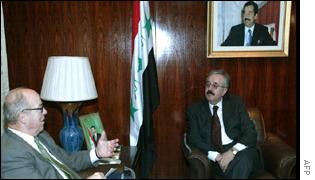 Under orders: Foreign minister Naji Sabri (right) Iraqi Foreign Minister Naji Sabri has issued Baghdad's first detailed rebuttal of UN Resolution 1441. The lengthy submission - in a carefully written letter to the UN on 23 November - was broadcast in full on Iraqi state television. It states that the resolution's real motive is "to create pretexts to attack Iraq under an international cover". However, it maintains that Iraq had decided to deal with the resolution "despite its bad provisions to steer our people, the region, and the world away from the outbursts of evil and aggression, which are being played up by the extremists in the US administration". 'False and baseless' Of the 22 objections raised in the letter to Resolution 1441, 12 relate to its preamble and the rest to the main body. The letter says, for example, that: 'Lies' The letter expresses anger over the preamble's expression of regret that there had been no inspection activities in Iraq since December 1998. "This paragraph is a crime against history and the facts," it states. It also accuses the UN of ignoring the "real dangers posed by the huge arsenal of nuclear, chemical and biological weapons of mass destruction" possessed by Israel. US 'pressure and extortion' Turning to the substance of the UN Resolution, Mr Sabri's letter makes a number of other points: Ulterior motives Mr Sabri's letter accuses the US of changing its tactics once it became clear that many countries were opposed to a military strike against Iraq. The US, he writes, "has a long history of using the Security Council as a cover for its aggressive intentions against Iraq since 1990". It concludes by stating that the points it set out "proved that that those who urged the UN Security Council to issue Resolution No 1441 have aims other than ascertaining that Iraq had not produced weapons of mass destruction." BBC Monitoring, based in Caversham in southern England, selects and translates information from radio, television, press, news agencies and the Internet from 150 countries in more than 70 languages. | | See also:  20 Nov 02 | Middle East 18 Nov 02 | Middle East 25 Nov 02 | Middle East 24 Nov 02 | Middle East Internet links: The BBC is not responsible for the content of external internet sites Top Media reports stories now: Links to more Media reports stories are at the foot of the page. | ||||||||||||||||||||||||||||||||||||||||||||||||||||||||||||||||||||||||||||||||||||||||||||||||||||||||||||||||||||||||||||||||||||||
| |
|  E-mail this story to a friend E-mail this story to a friend |
| |
| Links to more Media reports stories |
| | | ||
 | ||||
 | | Back to top
| ||
| ---------------------------------------------------------------------------------- To BBC Sport>> | To BBC Weather>> | To BBC World Service>> ---------------------------------------------------------------------------------- © MMIII | News Sources | Privacy  |




