|
 |
 | | | | | | |||||||||||||||||||||||||||||||||||||||||||||||||||||||||||||||||||||||||||||||||||||||||||||||||||||||||||||||||||||||||||||||||||||||||||||
| | | You are in: Monitoring: Media reports | |||||||||||||||||||||||||||||||||||||||||||||||||||||||||||||||||||||||||||||||||||||||||||||||||||||||||||||||||||||||||||||||||||||||||||||||
|
| | Wednesday, 28 August, 2002, 16:00 GMT 17:00 UK 'Long haul' for German crash trial 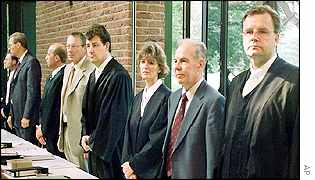 Are the engineers to blame for the 101 deaths? The start of the trial of three rail workers over Germany's worst rail crash four years ago is an important milestone in the quest for justice and truth, according to the country's press.
Berliner Zeitung points out that the documentation of the trial is extremely lengthy because of the technical details to be covered. "The investigations fill 350 bulky files. And the indictment is 186 pages long," the paper says. Berliner Morgenpost is one of several newspapers to home in on the question of wheel design.
"These wheels could not and cannot go wrong," a company executive is quoted as saying. The wheels were of a new design and the prosecution holds they were not tested properly. "Observers reckon the trial will last well into next year," the paper says. Cuts in rubberCologne's Express contrasts the horrific death toll with the difficulty in establishing guilt.
"A hundred and one people died, but the railway is counting on acquittal," says the headline. But one lawyer disagrees. Well before the accident, the wheels developed cuts in their rubber binding "which were visible to the naked eye". "It may be over four years since the disaster," the paper comments, "but we shall never forget the images." Loud rumbling "A repeat of the tragedy is now ruled out," says Berlin's Tageszeitung. This is because, by order of the state-run railways Deutsche Bahn, all the controversial wheels have been replaced. All the same, the paper notes, "so far the Deutsche Bahn has never admitted that the design of the wheels was the cause".
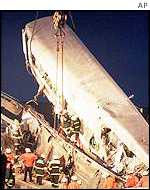
In a separate commentary headlined "Wheels of death" the paper recalls events leading up to the tragedy. "The problems began with loud rumbling and unexplained vibrations," the paper says. This was in 1991, when the new high-speed trains first came into service. "Passengers in the buffet car complained about the noise, spilt coffee and slopping soup," the paper says. Thus a new phenomenon was born: "Bistro-Brummen" or, loosely translated, buffet booming. As it threatened to chase away customers, "feverish work" was undertaken to rectify the problem. A technical fix was introduced. " The rumbling disappeared and the coffee stayed in the cups." Is anyone guilty? But only until 3 June 1998, when "the problems ended in catastrophe", Tageszeitung goes on. "All in all it took just 13 seconds." "Compartments 6, 7, 8, 9, 10, 11, 12 and 14 were thrust together like a concertina - there was no compartment 13." Then the paper asks the million-dollar question: "Whose fault is it? Is anybody guilty?" Were officials wrong to authorize the new wheels? "Or was the accident simply unpredictable?" What is predictable, however, is that the wheels will be at the centre of attention. BBC Monitoring, based in Caversham in southern England, selects and translates information from radio, television, press, news agencies and the Internet from 150 countries in more than 70 languages. | | See also:  06 Jun 98 | Europe 21 Jun 98 | Europe Internet links: The BBC is not responsible for the content of external internet sites Top Media reports stories now: Links to more Media reports stories are at the foot of the page. | |||||||||||||||||||||||||||||||||||||||||||||||||||||||||||||||||||||||||||||||||||||||||||||||||||||||||||||||||||||||||||||||||||||||||||||
| |
|  E-mail this story to a friend E-mail this story to a friend |
| |
| Links to more Media reports stories |
| | | ||
 | ||||
 | | Back to top
| ||
| ---------------------------------------------------------------------------------- To BBC Sport>> | To BBC Weather>> | To BBC World Service>> ---------------------------------------------------------------------------------- © MMIII | News Sources | Privacy  |