|
 |
 | | | | | | |||||||||||||||||||||||||||||||||||||||||||||||||||||||||||||||||||||||||||||||||||||||||||||||||||||||||||||||||||||||||||||||||||||||||||||||||||
| | | You are in: Monitoring: Media reports | |||||||||||||||||||||||||||||||||||||||||||||||||||||||||||||||||||||||||||||||||||||||||||||||||||||||||||||||||||||||||||||||||||||||||||||||||||||
|
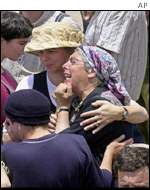
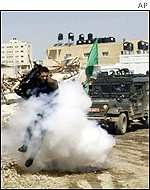
| | Saturday, 22 June, 2002, 13:00 GMT 14:00 UK Mid-East media war escalates Terrorists or freedom fighters? Media labels stick
Arab countries have pledged more than $20m for a media campaign targeting Israel. Their decision comes days before Israel is to launch an Arabic-language satellite TV service which Prime Minister Ariel Sharon says will be Israel's answer to "the propaganda coming from the Arab world". The channel, called Israel-Middle East, is due to go on air on next Tuesday. But Israel has denied that the broadcasts in Arabic will constitute propaganda.
Ra'anan Cohen, Israeli minister in charge of public broadcasting, who first proposed setting up the channel a year ago, said it would serve as "a counter-balance to the sea of venomous propaganda surrounding us". The channel will have an annual budget of $16m. When it is not showing TV programmes, it will broadcast Israel radio's Arabic service, which short-wave listeners in the Middle East sometimes find difficult to access. It will also carry a limited amount of programming in English. Winning hearts and minds Israel's Arabic satellite channel is the latest in a series of moves aimed at winning hearts and minds across the Middle East. In March, the US launched Radio Sawa, which features Western and Arab pop music mixed with news about Middle East diplomatic moves. Then in mid-June Iranian state radio launched a daily news bulletin in Hebrew called the Voice of David. But it cannot be heard by listeners inside Iran, which has an estimated 27,000 Jews.
Radio Sawa, which broadcasts on FM in Amman, Kuwait, Dubai and Abu Dhabi, is part of a "public diplomacy" campaign to counter the anti-US sentiment which grew after the 11 September attacks and US-led operation in Afghanistan. It is also audible on medium wave in Iraq, Egypt, Lebanon and Syria. The US ambassador to Jordan, Edward Gnehm, called the station an "instant hit among Jordan's young". But Shibley Telhami, a Middle East analyst who tracks Arab public opinion, told Reuters news agency: "If the idea is to influence people's positions on political issues, it's not going to work in the short term because if you don't trust the messenger, you don't trust the message." Discordant Arab voices For years Arab states have talked about launching a satellite channel to promote their point of view in English and other languages. A major impediment has been the reluctance of Arab governments and the Arab League to finance these plans.
But Arab information ministers who met in Cairo this week pledged a $22.5m media campaign targeting Israel. The money will fund services in English and Hebrew on Arab public and private satellite TV channels to address international and Israeli public opinion, said Syrian Information Minister Adnan Umran. It will also fund an Arab "media observatory" to be set up in Europe or the United States to counter portrayals of the Palestinian struggle as "terrorism". The multiplicity of Arab channels does not always make for a united Arab voice when addressing Western opinion. Some channels, like Qatar's Al-Jazeera TV, stand accused of dividing Arab ranks. And several Arab countries, including Iraq, Libya and Saudi Arabia, have been accused of planting intelligence agents posing as members of the public to take part in live satellite TV debates, in order to put across the opinions of their regimes rather than of their citizens. BBC Monitoring, based in Caversham in southern England, selects and translates information from radio, television, press, news agencies and the Internet from 150 countries in more than 70 languages. | | See also:  10 Jun 02 | Middle East 08 Oct 01 | Media reports 17 Dec 01 | Media reports 20 Nov 01 | Middle East Internet links: The BBC is not responsible for the content of external internet sites Top Media reports stories now: Links to more Media reports stories are at the foot of the page. | |||||||||||||||||||||||||||||||||||||||||||||||||||||||||||||||||||||||||||||||||||||||||||||||||||||||||||||||||||||||||||||||||||||||||||||||||||
| |
|  E-mail this story to a friend E-mail this story to a friend |
| |
| Links to more Media reports stories |
| | | ||
 | ||||
 | | Back to top
| ||
| ---------------------------------------------------------------------------------- To BBC Sport>> | To BBC Weather>> | To BBC World Service>> ---------------------------------------------------------------------------------- © MMIII | News Sources | Privacy  |