
|
 |
 | | | | | | ||||||||||||||||||||||||||||||||||||||||||||||||||||||||||||||||||||||||||||||||||||||||||||||||||||||||||||||||||||||||||||||||||||||||||||||||||||||
| | | You are in: Health | ||||||||||||||||||||||||||||||||||||||||||||||||||||||||||||||||||||||||||||||||||||||||||||||||||||||||||||||||||||||||||||||||||||||||||||||||||||||||
|
| | Monday, 25 November, 2002, 20:21 GMT Hospitals warned of terror threat 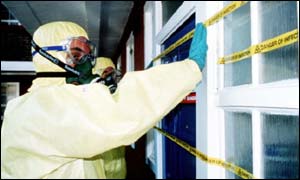 There is no specific threat of an attack at present NHS hospitals have been put on alert for a terrorist attack involving chemical or biological agents. Public health officials have issued guidelines to doctors telling them how to identify and treat patients caught up in an attack. The latest information from the Public Health Laboratory Service covers the deliberate release of anthrax, smallpox, botulism, plague and other potentially lethal agents.
Prime Minister Tony Blair has said that while there is no specific terror threat the public should be on alert. The Department of Health is planning a major public information campaign next year advising people how to act in the event of an attack. Rolling programme PHLS officials have updated many of their guidelines on how to deal with the deliberate release of a chemical or biological agent in recent weeks. The documents - available on its website - spell out how people would be affected if they are exposed to agents like anthrax. The guidelines tell doctors what symptoms they should look out for. They also include advice on when patients should be isolated and what treatment they should be given. The PHLS said the latest review of its guidelines where part of on-going efforts to ensure the NHS is prepared in the event of an attack. "We are updating our guidelines on a rolling basis," a spokesman said. "It is part of an on-going programme." He added: "We have now issued guidance on all of the main infectious disease threats, such as anthrax, botulism, plague and smallpox. "We have not had any specific threat but we want to make sure that health professionals have access to good information on all of these diseases." Warning A report by the National Audit Office published earlier this month warned that many hospital and ambulance trusts do not have adequate plans to deal with a biological, chemical, radiological or nuclear attack. It called on the government to make sure NHS plans are up-to-date and to ensure hospitals and ambulance trusts are able to cope in the event of an attack. The Department of Health has said officials are working hard to ensure the NHS would be able to deal with such an emergency. Officials insist that the UK is in a much better position to cope with an attack than it was just one year ago. The PHLS spokesman said: "We are certainly a lot better prepared than we were a year ago. We are keeping a watching brief on this." | |
Internet links:  The BBC is not responsible for the content of external internet sites Top Health stories now: Links to more Health stories are at the foot of the page. | ||||||||||||||||||||||||||||||||||||||||||||||||||||||||||||||||||||||||||||||||||||||||||||||||||||||||||||||||||||||||||||||||||||||||||||||||||||||
| |
|  E-mail this story to a friend E-mail this story to a friend |
| |
| Links to more Health stories |
| | | ||
 | ||||
 | | Back to top
| ||
| ---------------------------------------------------------------------------------- To BBC Sport>> | To BBC Weather>> | To BBC World Service>> ---------------------------------------------------------------------------------- © MMIII | News Sources | Privacy |






