
|
 |
 | | | | | ||||||||||||||||||||||||||
| | You are in: Business | ||||||||||||||||||||||||||||
 | | Wednesday, 3 April, 2002, 06:01 GMT 07:01 UK US targets trade partners 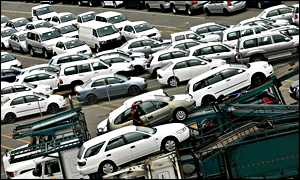 Exports are up, but the US reckons more needs to be done to boost trade The US shrugged off charges of growing protectionism from the rest of the world on Tuesday to take aim at "pockets of resistance" to free trade elsewhere. In an annual report required by Congress, the US Trade Representative's (USTR) Office listed 55 countries, accusing many of them of building tariff barriers which cost US firms export sales. Japan and the European Union are both high on the USTR's list of offenders. The two are also the loudest voices against the Bush administration's decision to slap tariffs on foreign steel, in an attempt to shore up votes ahead of elections in November and protect the US steel industry. Worst offenders The report devotes as much as 10% of its 460 pages to Japan, which it cited for agricultural import barriers and anti-competitive telecoms connection fees. In particular it singled out restrictions on apple imports based on concerns over a bacterial infection, a barrier which could yet trigger a US complaint to the World Trade Organisation. Europe's Common Agricultural Policy also comes in for criticism, with the ban on genetically modified crops and hormone-treated beef chosen as examples of protectionism. Other highlights include:
The report noted some improvements in the picture for US exporters, notably in Brazil where substantial liberalisation has come in recent years - although an unwieldy licensing system and customs regime came in for criticism. But China - also vociferous in its dissatisfaction with the steel tariffs and one of the WTO's newest recruits - was criticised for non-tariff barriers on agricultural produce. Defensive The report may be an annual ritual, but the equally traditional complaints from allies and trade partners will be especially loud this year given the US steel tariffs. Speaking to reporters at the report's launch, USTR officials said that the tariffs - of up to 30%, for the next three years - are a legitimate effort to stop unfair trade supported by foreign government subsidies. The report contained numerous examples of such behaviour, they said. "By identifying barriers to trade, we can work with our trade partners globally, regionally and bilaterally to eliminate these barriers while further liberalising our market at home," said US Trade Representative Robert Zoellick in a statement. In response, Japan is likely to point to anti-free trade regulations in the US - for example the law which means Congress still has to approve the takeover by any foreign company of a US telecoms carrier. Despite complaints about the state of free trade, the US trade deficit actually fell slightly last year to $347.8bn from $375.5bn in 2000. | |
See also:  Internet links: The BBC is not responsible for the content of external internet sites Top Business stories now:  Links to more Business stories are at the foot of the page. | ||||||||||||||||||||||||||
|
Links to more Business stories |
 | | ^^ Back to top News Front Page | World | UK | UK Politics | Business | Sci/Tech | Health | Education | Entertainment | Talking Point | In Depth | AudioVideo ---------------------------------------------------------------------------------- To BBC Sport>> | To BBC Weather>> ---------------------------------------------------------------------------------- © MMIII|News Sources|Privacy  |


 E-mail this story to a friend