





2 May 2008
The Peninsular War (1808 - 1814)
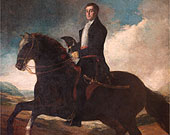
On the 2 May 1808, the citizens of Madrid rose up against the French invaders, triggering the Peninsular War.
But while the events of the 'Dos De Mayo' are the centre of prolonged parades, festivals and celebrations in Spain, nothing is planned to mark the anniversary in Britain.
The Peninsula War saw 60,000 British troops at any one time fighting in Spain and Portugal. It was the greatest deployment in Europe before World War I. Deaths from wounds and sickness amounted to at least 40,000 - a loss rate comparable to that of WWI.
About the Peninsular War
The story of the British Army in the Peninsular is, in fact, one of success: the Army did not suffer a single defeat. Many British regiments continue to treasure their association with the struggle; many trace their roots back to that period.
Wider interest continues. Battlefield tours in Spain are increasingly popular and, as seen in the success of the Sharpe novels, the lure of the period continues. There is also an ongoing fascination with the British commander, Arthur Wellesley.
“The Duke of Wellington is beyond doubt the most gifted and successful general in British history,” says Professor Charles Esdaile, from the University of Liverpool.
“He was not a charismatic leader, he was often unfair, he was not the best of coalition generals, and he was trusted rather than respected, but his grasp of strategy, his ability to plan complex operations, his logistical skills, his ability to carry the government with him, his eye for ground, his moral courage and his coolness under fire were all outstanding.”
In Spain, the commemorations have a particular resonance. Over one million people died in the war – this from a population of 11 million. In Spain, the war is known as the Spanish Independence War; a source of pride as the Spanish were the first to stand up to Napoleon’s dominance.
It became a period when Spain and Portugal threw off the past. Spain lost her empire on the mainland of South America, while acquiring a modern constitution. The war was remarkable for the co-operation between the Spanish, British and Portuguese.
But, as Professor Esdaile points out, on all sides there remains a great deal of ignorance and prejudice. In both Britain and Spain the war tends to be remembered in a nationalistic fashion that tends to downplay the contribution of the other.
In pictures: Peninsular War bicentenary
The Duke of Wellington: Soldiering to Glory
The Peninsular War (Wikipedia)
English Heritage looks after Apsley House, home of the first Duke of Wellington

