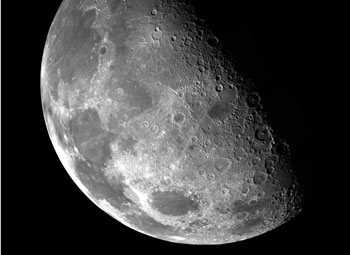
It’s been nearly 40 years since the first person set foot on lunar soil.
But this push for human exploration of the Moon was cut short after only 3 years, when Apollo 17 left in 1972. No one has walked on the surface since.
Now we’re going back to the Moon. A host of countries around the world are launching missions over the coming year. China, India and Japan are competing alongside the US to become the next nation to reach the surface.
In this two-part series, former NASA astronaut Jeff Hoffman looks at this new global space race.
Programme 1
What are the political and social factors behind this return to the Moon?
Jeff Hoffman examines the development of the new Asian space-powers - China, India and Japan.
Plus he asks whether today’s missions are being driven by competition or collaboration?
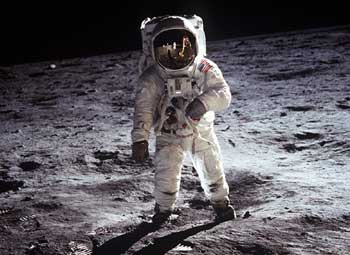
Astronaut Buzz Aldrin, lunar module pilot, walks on the surface of the Moon near the leg of the Lunar Module (LM) "Eagle" during the Apollo 11 exravehicular activity (EVA). [Image courtesy of NASA]
Programme 2
Unlike the Apollo days, in the future we could see astronauts living on the Moon for up to 6 months at a time.
In this episode, Jeff Hoffman discovers what space-faring nations are planning to do on the lunar surface.
To what extent is this new era of lunar exploration being driven by public science or private commerce?